Long before David Hasselhoff was flexing on Baywatch, he was driving a Pontiac Trans Am in Knight Rider. The show centered on Michael Knight and his artificially intelligent car, KITT. The vehicle was a fantasy for any teenage boy with a driver’s permit. It hit 300 mph. It had a voice that sounded like a wise grandfather. It was the ultimate dream machine.
But here is the catch. KITT didn’t run on gasoline. The script gave it a hydrogen-powered engine. That allowed Knight to chase bad guys across the screen without worrying about emissions.
Fast forward a few years. The show died. The ratings tanked. But the idea of hydrogen didn’t. Politicians started talking about it as the magic bullet. They said it would replace coal and oil. They said it would fix our energy crisis. In 2003, George W. Bush threw $1.2 billion at the problem. He wanted hydrogen to become the standard fuel for Americans.
It makes sense on paper. Hydrogen powers the sun. It is the most abundant element in the universe. We can make it from water. It burns clean. No smog. No greenhouse gases.
So why hasn’t it taken over?
Think about rust. Rust destroys metal. Hydrogen does the same thing. It makes metal brittle. It reduces structural strength. It eats away at a car’s frame like termites in wood. If you want a vehicle that doesn’t fall apart, hydrogen is a headache.
The Problem With Hydrogen Fuel Cells
The core issue with hydrogen fuel cell technology is durability. Traditional internal combustion engines are tough. They handle heat and pressure well. Hydrogen fuel cells are different. They operate at lower temperatures but still face material challenges.
Metal components degrade. This is not a minor inconvenience. It is a fundamental engineering barrier. Cars need to last. If the tank corrodes, the car stops working. That is why most manufacturers stick with batteries or traditional gas.
The promise of hydrogen was clear. Clean energy. Unlimited supply. Zero pollution at the tailpipe. But the reality is messy. The infrastructure is lacking. The storage is difficult. The materials are finicky.
We are still waiting for the technology to catch up to the hype. Until then, KITT remains a fiction. And real cars stay on gasoline.
The Invisible Enemy Inside Metal
We are looking at high-strength alloys now. Steel. Nickel-based composites. The stuff that keeps your chassis rigid and your suspension from collapsing. Hydrogen atoms don’t care about your structural integrity. They just slip in.
Scientists have known about this since 1875. They still don’t fully get the physics. What we know is this: hydrogen diffuses. It spreads. Especially when things get hot. Once inside, the atoms pair up. They become molecules. They hide in microscopic cracks within the metal lattice.
Pressure builds. Rapidly.
Tensile strength drops. Then the metal snaps. No warning. No rust. Just a clean break.
Researchers can’t predict where it will happen next. Computer simulations show it happening in real-time. The severity depends on the alloy type and ambient temperature. It is a silent killer of structural components.
“Hydrogen embrittlement has become the bane of such things as aircraft carriers, battleships, airplanes, spaceships and nuclear reactors.”
The stakes have always been high. In 1985, a British soldier was crushed. American-made 155 mm howitzer bolts failed. They were holding the gun’s raising and lowering manifold. The bolts snapped under the stress of firing. Hydrogen embrittlement made them too brittle to handle the jolts. The soldier pinned underneath. A year earlier, M1 Abrams tank bolts snapped too. Same issue.
It’s not just military hardware. The auto industry is sweating this. Specifically the hydrogen-powered segment.
Fuel Cells and the Corrosion Problem
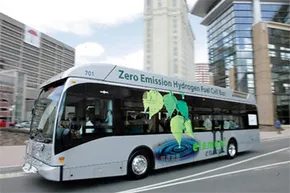
Hydrogen vehicles use fuel cells. The chemistry is simple. Hydrogen meets oxygen. You get heat. You get electricity. The only exhaust is water vapor. Clean. Efficient.
But the infrastructure has a flaw. Metal components are vulnerable.
Infiltration starts at the factory. Chromium plating. Welding. Milling. Pressing. All these processes introduce hydrogen into the metal matrix. It doesn’t stop there. Driving the car saturates the metal further. Hydrogen seeps into fuel tanks. It eats into ball bearings. It degrades fuel cell stacks.
Parts fail without warning.
You think about a fuel line cracking while you’re doing 70 mph on the interstate. Or a suspension arm giving out. The repair bills are astronomical. And the risk is lethal.
Don’t scrap the concept of the hydrogen car yet. Researchers in Germany are tracking atom movement. They are mapping the routes. The goal is embrittlement-resistant materials. New alloys that repel the hydrogen.
Scientists are also experimenting with thermal solutions. Constantly heating the trapped atoms. Keeping them in motion so they don’t settle and create pressure pockets.
Better understanding leads to better engineering. Onboard fuel tanks that don’t degrade. Components that last.
We are close to solving the puzzle. The materials science is catching up to the ambition.
Is the Future of Automotive Powered by Gas?
Why do we keep coming back to hydrogen? It’s dense energy. Lightweight. No carbon emissions at the tailpipe. But the storage is hard. The tanks are heavy. The metal keeps failing.
The breakthrough won’t be in the engine. It will be in the metallurgy.
If we can stop the diffusion, we can use high-pressure hydrogen safely. We can build lighter cars. Cars that travel further on a single fill. No charging stations needed. Just a pump.
The science is moving fast. Simulations are getting more accurate. Material testing is becoming more precise.
We’ll see hydrogen cars. They won’t look like today’s prototypes. They’ll look like regular cars. But under the hood, the tanks and lines will be different. Reinforced. Resilient.
Until then, we watch the bolts. We watch the tanks. We wait for the metal to cooperate.