


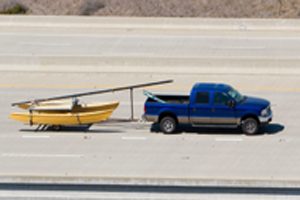
Towing capacity is the hard limit. It is the maximum weight your vehicle can pull without breaking something. Manufacturers set this number. You can find it in the manual. Ignore third-party hitch ratings. Those hitches fit everything. Your car is the weak link. Stick to the manufacturer’s specs. Break it and it’s on you.
This guide covers 2006 through 2009 models. We look at Acura, Audi, BMW, Buick, and Cadillac.
Why Numbers Matter
Your towing capacity chart shows limits by year and make. But the number isn’t static. Passenger weight over 150 lbs counts. Optional equipment counts. Cargo in the trunk counts. Add it all up. Never exceed the limit.
Push past the limit. Handling degrades. Stopping distances increase. The drivetrain takes damage. Do not risk it.
Acura Towing Capacity
Acura offers modest towing numbers here. The MDX is the king. It pulls 5000 lbs in 2007-2009. Down from 3500 lbs in 2006.
The RL and TL are light pullers. 1000 lbs each. The RSX and TSX hold up to 1500 and 1000 lbs respectively. The RDX drops in 2007. 1500 lbs.
| Year | Model | Max Towing Capacity (lbs) |
|---|---|---|
| 2006 | MDX | 3500 |
| 2006 | RL | 1000 |
| 2006 | RSX | 1500 |
| 2006 | TL | 1000 |
| 2006 | TSX | – |
| 2007 | MDX | 5000 |
| 2007 | RL | 1000 |
| 2007 | RDX | 1500 |
| 2007 | TL | 1000 |
| 2007 | TSX | 1000 |
| 2008 | MDX | 5000 |
| 2008 | RL | 1000 |
| 2008 | RSX | 1500 |
| 2008 | TL | 1000 |
| 2008 | TSX | 1000 |
| 2009 | MDX | 5000 |
| 2009 | RL | 1000 |
| 2009 | RSX | 1500 |
| 2009 | TSX | 1000 |
Need more data? Check Acura GVWR. Or Acura GAWR. Acura GCWR is key too. Don’t ignore payload.
Audi Towing Capacity
Audi keeps it simple. Most cars do not tow. A3. A4. A6. A8. S4. TT. Zero capacity.
The Q7 is the outlier. 5500 lbs. Consistent from 2007 to 2009. The R8 and RS4? No go.
| Year | Model | Max Towing Capacity (lbs) |
|---|---|---|
| 2006 | A3 | – |
| 2006 | A4 | – |
| 2006 | A6 | – |
| 2006 | A8 | – |
| 2006 | S4 | – |
| 2006 | TT | – |
| 2007 | A3 | – |
| 2007 | A4 | – |
| 2007 | A6 | – |
| 2007 | A8 | – |
| 2007 | Q7 | 5500 |
| 2007 | RS4 | – |
| 2007 | S4 | – |
| 2007 | S6 | – |
| 2007 | S8 | – |
| 2008 | A3 | – |
| 2008 | A4 | – |
| 2008 | A5 | – |
| 2008 | A6 | – |
| 2008 | A8 | – |
| 2008 | Q7 | 5500 |
| 2008 | R8 | – |
| 2008 | RS4 | – |
| 2008 | S4 | – |
| 2008 | S5 | – |
| 2008 | S6 | – |
| 2008 | S8 | – |
| 2008 | TT | – |
| 2009 | A3 | – |
| 2009 | A4 | – |
| 2009 | A5 | – |
| 2009 | A8 | – |
| 2009 | Q7 | 5500 |
| 2009 | R8 | – |
| 2009 | S4 | – |
| 2009 | S5 | – |
| 2009 | S8 | – |
| 2009 | TT | – |
Check Audi GVWR. Audi GAWR matters for axle load. Audi GCWR defines the total system weight.
BMW Towing Capacity
BMW xDrives handle the load. X3 pulls 3500 lbs. X5 and X6 go to 6000 lbs.
Sedans? No. 325. 330. 525. 530. 550. 650. 750. 760. M3. M5. M6. All zero. The Z4 and Z4M are out.
| Year | Model | Max Towing Capacity (lbs) |
|---|---|---|
| 2006 | 325 | – |
| 2006 | 330 | – |
| 2006 | 525 | – |
Chevrolet Specs: Pulling Power by Year
The numbers don’t lie, but they do change. Look at the 2006 Chevrolet Silverado 1500. It rated at 5700 lbs. By 2007, that dropped to 4600 lbs for the standard body style. Weird? Maybe. Just another quirk of annual tuning or different testing protocols. The Hybrid version held its own at 6700 lbs that same year.
Trucks are where it gets interesting. The Silverado 2500 HD sat comfortably around 10,000 to 10,100 lbs from 2006 through 2009. Not a massive jump. But the 3500 HD models? They climbed from 9500 lbs in ’06 to 9700 lbs in ’09. Small gains matter when you are hauling heavy equipment.
SUVs tell a different story. The Tahoe lost significant ground. 2006 saw it at 5700 lbs. By 2007 and 2008, it was down to 4500 lbs. That is a 1200 lb drop. Why? Likely increased curb weight or emission system additions. The Hybrid Tahoe came in late 2008, offering 6200 lbs. Better than the V8 Tahoe of the previous year? Yes.
Crossovers like the Equinox stayed flat. 3500 lbs. Consistent. Predictable. Meanwhile, the Avalanche 1500 took a nosedive. 7300 lbs in 2006. Down to 5000 lbs by 2009. That is a 3000 lb hit. If you were hauling a boat in ’09, you might have been pushing limits.
Chrysler Towing Limits Explained
Chrysler kept it simple. The 300 and 300C sedans never ventured far. 1000 lbs for the base 300. 2000 lbs for the 300C. Consistent across 2006 to 2009. You don’t tow a camper with a 300C. It’s about style, not substance.
The minivans tell the real tale. The Town & Country started at 1700 lbs in 2006. Doubled to 3600 lbs by 2008. Why the change? Engine updates? Transmission cooling? The PT Cruiser also saw a jump. 3500 lbs in ’06. 2600 lbs in ’08. Wait, that’s a drop. Actually, looking closer, the ’06 data says 3500, but ’08 says 2600. Then back up? No, the data shows a dip. Or perhaps the ’06 figure included a specific package. Either way, precision matters.
The Aspen was a newcomer. 2007 entry. 8950 lbs. A solid number for a mid-size SUV. The Hybrid Aspen followed in 2009 with 6000 lbs. Less than the gas version. Efficiency trade-off. You trade towing capacity for MPG. Standard compromise.
Dodge Truck and Van Capabilities
Dodge trucks built for torque. The Ram 3500 was the beast. 10,500 lbs in 2006. Climbed to 10,650 in ’07. 10,700 in ’08. Then a massive leap to 12,300 lbs in 2009. That is a 2000 lb increase in one year. Huge. Something changed in the powertrain or chassis. Maybe a new engine calibration.
Ram 2500 models hovered around 9000 to 9300 lbs. Not flashy. But reliable. The Sprinter vans held steady at 5000 lbs for the 2500 model. The 3500 model jumped from 5000 to 7500 lbs in 2007. A significant jump. Good for commercial fleets.
SUVs like the Durango stayed in the 3750 to 3850 lb range. Flat. The Dakota trucks dipped slightly. 3300 lbs in ’06. 3150 lbs in ’08. A minor reduction. Likely weight creep.
The Grand Caravan minivan sat at 3700 lbs for most years, dropping to 3600 lbs in ’08 and ’09. Consistency is boring. But boring is safe.
Ford Tow Rating Breakdown
Ford’s lineup was vast. The F-Series dominated. The F-150 started at 6400 lbs in 2006. Climbed to 6500 in ’07 and ’08. Then a huge jump to 8700 lbs in 2009. What happened? New aluminum body? Engine swaps? The 2009 model year was a turning point for Ford trucks.
Heavy duty trucks told the same story. The F-250 hit 10,600 lbs in 2007. Dipped slightly in ’08. The F-350 reached 10,700 lbs in ’08. The F-450 super duty was the outlier. 16,000 lbs in 2008. Down to 10,700 in 2009. A massive drop. Why? Maybe a reclassification of towing vs. payload? Or a different chassis configuration. It’s confusing.
Vans were workhorses. The E-Series E-350 Super Duty sat at 7500 lbs in ’06. Dropped to 7400 in ’08 and ’09. Negligible. The E-150 and E-250 hovered around 6000 lbs.
SUVs? The Expedition led the pack. 9200 lbs. The Explorer was modest. 3110 lbs in ’06. Up to 3500 by ’07. Stable. The Escape Hybrid was limited to 1000 lbs. Don’t try to tow a trailer with a hybrid Escape. It’s not built for it.
Comparing Towing Capabilities Across Brands
Which brand pulls the most? It depends on the year. In 2009, Dodge’s Ram 3500 took the crown at 12,300 lbs. Ford’s F-150 was close behind at 8700 lbs for half-ton duty. Chevrolet’s Silverado 2500 HD lagged slightly at 10,000 lbs. But the Silverado 3500 HD was close at 9700 lbs.
Minivans? Chrysler and Dodge tied at 3600 lbs for the Grand Caravan and Town & Country. Ford’s minivans (Freestar) were rated at 3500 lbs. Tight race.
SUVs? Ford’s Expedition was king at 9200 lbs. Chevy’s Tahoe was lower. Dodge’s Durango was mid-pack. The Aspen from Chrysler offered 8950 lbs. A strong contender.
Hybrids generally lose towing capacity. Chevy’s Tahoe Hybrid gained over the V8. Ford’s Expedition Hybrid isn’t listed in the top tiers, suggesting lower ratings. Chevy’s Tahoe Hybrid at 6200 lbs beat the 4500 lb V8 model. That’s an anomaly. Maybe the electric assist helped torque delivery.
Understanding Why Numbers Shift
Why do tow ratings change year to year? It’s not always the engine. Sometimes it’s the frame. Sometimes it’s the cooling system. Or the transmission. Ford’s 2009 F-150 jump suggests a major engineering update. Chrysler’s Town & Country doubling from 1700 to 3600 lbs implies a new powertrain or hitch rating.
Always check the specific trim. The Silverado 1500 SS rated higher than the standard model in 2006. 7500 lbs vs 5700 lbs. High-performance trims often have different cooling and suspension setups.
The data above
GMC truck towing numbers
GMC didn’t mess around with capacity. If you needed to haul a boat in 2006, the Sierra 2500 was the answer. It pulled 10,500 pounds. That’s a lot of boat. The Sierra 3500 was close behind at 10,000. But the Sierra 1500? A meager 4,000. You couldn’t trust it with a heavy trailer.
By 2007, things shifted. The Sierra 1500 got stronger. 4,800 pounds. Still not a beast, but better. The heavy duty trucks stayed consistent. The Sierra 2500 did 10,400. The Sierra 3500 hit 10,100. The Yukon dropped though. 5,700 in 2006 down to 4,500 in 2007. Why? Maybe weight creep. Maybe different engine tunes. The Yukon Hybrid appeared in 2008 with 6,200. That’s higher than the regular Yukon. Efficiency doesn’t always mean weakness.
The Canyon started weak. 1,800 in 2006. By 2008 it was at 2,400. Still a mid-size truck. The Envoy held steady at 5,300 for years. The Savana vans were workhorses. 6,300 for the 2500 model. The 3500 dipped slightly to 6,200. Maybe the extra weight of the larger frame hurt the hitch rating. The Acadia appeared in 2007. 2,000 pounds. It’s a crossover. It’s not a truck.
Honda hauling limits
Honda is about reliability. Not brute force. The Accord pulls 1,000 pounds. That’s a jet ski maybe. The Civic pulls 1,500. A small utility trailer. The Odyssey and Pilot both sit at 3,500. Consistent. The Ridgeline is the outlier. 5,000 pounds in 2006 and 2008. It’s a truck with a bed. It can actually tow.
The CR-V never had a rating listed. You didn’t tow with it. The Element was 1,500. Small. The S2000 never towed anything. It was a sports car. If you tried, you’d break the subframe. The Fit had no rating. It’s tiny.
In 2009, the Civic dropped to 1,000. Did they weaken it? Or just tighten the warranty? The Accord and Pilot stuck to 3,500. The Ridgeline disappeared from the list in 2009. Maybe production paused. Maybe sales tanked. The data ends there. It’s frustrating. You want to know if the new Ridgeline is better. We don’t know. We only have up to 2009.
Hummer power
The Hummer H2 started at 6,500. Then 6,600. Then 8,200. It got stronger. Or maybe they just found a better hitch configuration. The H3 stayed at 3,000. Flat. No growth. The H3T pickup appeared in 2009 with 4,400. That’s a surprise. A pickup can tow more than the SUV version. The H1 Alpha pulled 7,887. That’s oddly specific. Probably a military spec carryover.
The H2 is a brick. It doesn’t slice air. It pushes it. That’s why the numbers jump. The engine doesn’t care. The transmission handles the torque. The H3 is lighter. The suspension can’t handle more than 3,000. Don’t push it. The H3T has a bed. It’s meant for utility. 4,400 is respectable for a small SUV-based truck.
Hyundai versatility
Hyundai wasn’t big on towing in this era. The Elantra starts at 1,500 then drops to 750. Why? Maybe they found a weak point in the chassis. The Azera sits at 1,000. The Sonata too. The Tucson is 1,000. Small crossovers. The Santa Fe is higher. 2,700 in 2006. Then drops to 1,650. Why the cut? Maybe the 4-cylinder engine couldn’t handle the load in later years.
The Veracruz had no rating. The Entourage was a minivan. 1,000 pounds. It’s a people mover. Not a hauler. The Accent and Tiburon never towed. The Genesis appeared in 2009 with no rating. It was new. They hadn’t tested it yet. The data is sparse. Hyundai was focusing on sales volume, not capability. You bought one for the price. Not for the tow package.
Infiniti luxury limits
Infiniti is luxury. Towing is utility. They don’t mix well. The G35 and M35/M45 sedans only pull 1,000 pounds. You’re not towing with a G35. You’re towing with a QX56. That’s an SUV. 9,000 pounds. That’s a big number. It’s heavy. It’s built on a truck platform. The FX35 and FX45 pull 3,500. Crossovers. They’re sporty. Not for heavy loads.
In 2008, the G35 and M series vanish from the towing list. Did they stop offering tow packages? Or just not rate them? The EX35 has no rating. It’s a smaller crossover. The FX50 appears in 2009 with 3,500. The QX56 stays at 9,000. It’s the only Infiniti that can actually work. The rest are for show. Don’t try to tow a boat with an FX. You’ll scare the passengers.
Isuzu practicality
Isuzu is niche. The Ascender holds steady at 5,300. It’s a Buick Enclave sibling. Shared platform. The i-series trucks changed names. i-280 to i-290. i-350 to i-370. The capacity grew. 1,700 to 2,100 to 2,200 for the small truck. The big truck went from 4,000 to 5,500. That’s a significant jump. 2008 was a good year for Isuzu capability.
The Ascender didn’t grow. It stayed at 5,300. Maybe the chassis maxed out. The i-370 at 5,500 is impressive for a mid-size truck. It can handle a small camper. The i-290 is only 2,200. Don’t push it. It’s a commuter truck. The data stops at 2008. Isuzu left the US market soon after. These numbers are historical now. You can’t buy them new. You buy them used. Check the suspension.
Jaguar elegance
Jaguar doesn’t tow. The table says nothing. No dashes. No numbers. Just nothing. The S-Type, X-Type, XJ8, XJR, XK8, XKR. None of them have a rating. In 2009, the XF appears. Still nothing. The XK Coupe too. Jaguar is about style. About speed. About luxury. Towing ruins the line. Towing ruins the stance.
Maybe they have hidden ratings. Maybe they just don’t advertise them. But if it’s not in the manual, don’t do it. The suspension is tuned for comfort and handling. Not for hauling a trailer. You’ll bottom out. You’ll break the exhaust. You’ll look foolish. Stick to the Land Rover if you need to tow. But don’t take a Jaguar. It’s not built for that. The data confirms it. There is nothing to see here. Just empty space where capability should be.
Jeep ruggedness
Jeep is about off-road. But on-road towing? It’s consistent. The Commander, Grand Cherokee, and Liberty all pull 3,500. That’s a solid mid-range number. The Wrangler and Patriot only do 1,000. They’re small. Or they’re too soft. The Liberty dropped to 2,000 in 2008. Why? Maybe they changed the frame. Maybe they added safety features that added weight. The Compass stayed at 1,000. It’s small.
The Wrangler Unlimited didn’t get better. 1,000. It’s a hard-top. It shakes. It doesn’t tow
You can’t just eyeball a trailer hitch and guess. You need numbers. Hard, cold specs. If you are dragging a camper, a boat, or a load of gravel, you need to know the max towing capacity for your specific year and model. The data below covers the 2006 through 2009 model years for several major manufacturers.
Some vehicles in this window pulled surprisingly heavy. Others could barely pull their own weight. We have stripped out the marketing fluff. Here is what the manufacturers actually rated these platforms for.
Lexus Towing Capacity
Lexus plays in a weird lane. They have luxury sedans that refuse to tow anything. Then they have full-size SUVs that can haul serious weight. The gap between an ES 350 and an LX 570 is massive.
“If your Lexus doesn’t have a factory tow package, assume it cannot tow.”
2006 Lexus Specs
The GX 470 and LX 470 are the heavy hitters here. Both max out at 6500 lbs. That is solid for off-road capable platforms. The RX 330 and RX 400h (the first generation hybrid) hold steady at 3500 lbs. The LS 430 sedan? It tops out at just 2000 lbs. Everything else—the ES, GS, IS, SC—has a dash. No towing capability.
2007 Lexus Specs
The lineup shifts slightly. The RX 350 replaces the older V6 options in the crossover segment. It still pulls 3500 lbs. The RX 400h hybrid maintains that figure. The GX 470 and LX 470 remain at 6500 lbs. Note that the LS 460 (the new V8) drops to a dash. It cannot tow. The GS 450h hybrid also has no towing rating.
2008 Lexus Specs
This is where things get interesting. The LX 570 debuts. It jumps the towing capacity to 8500 lbs. That is a massive increase over the previous LX 470. The RX 350 and RX 400h drop significantly to 2000 lbs. Why? Likely due to changes in platform stiffness or cooling systems for the new generation. The IS-F, LS 600h, and GS 460 cannot tow.
2009 Lexus Specs
The RX 350 stays at 2000 lbs. The GX 470 and LX 570 keep their ratings of 6500 lbs and 8500 lbs respectively. The IS-F remains a track-focused coupe with no towing ability.
| Year | Model | Max Towing Capacity (lbs) |
|---|---|---|
| 2006 | GX 470 | 6500 |
| 2006 | LX 470 | 6500 |
| 2006 | RX 330 | 3500 |
| 2006 | RX 400h | 3500 |
| 2006 | LS 430 | 2000 |
| 2007 | GX 470 | 6500 |
| 2007 | LX 470 | 6500 |
| 2007 | RX 350 | 3500 |
| 2007 | RX 400h | 3500 |
| 2008 | LX 570 | 8500 |
| 2008 | RX 350 | 2000 |
| 2008 | RX 400h | 2000 |
| 2009 | LX 570 | 8500 |
| 2009 | GX 470 | 6500 |
| 2009 | RX 350 | 2000 |
Lincoln Towing Capacity
Lincoln in the mid-2000s was essentially Ford with better carpeting. The towing numbers mirror the Ford equivalents almost exactly. If you are looking at a Navigator or Mark LT, you are looking at serious utility disguised as luxury.
2006 Lincoln Specs
The Mark LT is the standout. Rated at 8900 lbs, it could tow just about anything a Ford F-150 could. The Navigator sits at 6000 lbs. The Town Car sedan? It is limited to 2000 lbs. The LS and Zephyr have no ratings.
2007 Lincoln Specs
The MKX enters the scene. It is a compact luxury crossover. It is rated for 2000 lbs. The Mark LT and Navigator hold their ground at 8900 lbs and 6000 lbs. The Town Car stays at 2000 lbs. The MKZ cannot tow.
2008 Lincoln Specs
No major changes in ratings. The MKX remains at 2000 lbs. The Mark LT and Navigator stay at 8900 lbs and 6000 lbs. The MKZ still cannot tow.
2009 Lincoln Specs
The MKS sedan debuts. It has a modest towing capacity of 1000 lbs. That is barely enough for a small trailer with a motorcycle. The MKX remains at 2000 lbs. The Navigator and Mark LT (though likely phased out for newer models) are listed at 6000 lbs and 8900 lbs.
| Year | Model | Max Towing Capacity (lbs) |
|---|---|---|
| 2006 | Mark LT | 8900 |
| 2006 | Navigator | 6000 |
| 2006 | Town Car | 2000 |
| 2007 | MKX | 2000 |
| 2007 | Mark LT | 8900 |
| 2007 | Navigator | 6000 |
| 2007 | Town Car | 2000 |
| 2008 | MKX | 2000 |
| 2008 | Mark LT | 8900 |
| 2008 | Navigator | 6000 |
| 2008 | Town Car | 2000 |
| 2009 | MKS | 1000 |
| 2009 | MKX | 2000 |
| 2009 | Navigator | 6000 |
| 2009 | Town Car | 2000 |
Mazda Towing Capacity
Mazda in this era was the underdog. They had the Miata, the RX-8, and some crossover utility. The towing numbers reflect their philosophy: fun first, utility second.
2006 Mazda Specs
The BT-Series trucks are the workhorses. The B4000 pulls 3140 lbs. The B3000 pulls 2500 lbs. The B2300 pulls 1600 lbs. The MPV minivan is rated at 2000 lbs. The Tribute crossover is at 1500 lbs. The Mazda3, 6, 5, MX-5, and RX-8 have no ratings.
2007 Mazda Specs
The CX-7 and CX-9 debut. Both are rated at 2000 lbs. This is decent for crossovers of that size. The BT-Series numbers shift slightly. The B2300 drops to 1580 lbs. The B3000 drops to 2480 lbs. The B4000 stays at 3100 lbs. The Tribute remains at 1500 lbs.
2008 Mazda Specs
The BT-Series trucks are still around. The B2300 is back at 1600 lbs. The B4000 is at 3140 lbs. The CX-7 and CX-9 hold steady at 2000 lbs. The Tribute Hybrid joins the lineup, also rated at 2000 lbs.
2009 Mazda Specs
The BT-Series B2300 and B40
Pontiac and Saturn: The End of an Era
The writing was on the wall for GM’s dying brands. If you are looking for Pontiac towing capacity in the late 2000s, you are mostly looking at a graveyard of low limits. The Pontiac G6, Grand Prix, and GTO were not built for heavy hauling. They maxed out at 1,000 lbs. That is barely enough for a small jet ski or a tandem trailer with your own gear.
The Montana SV6 and Torrent were the exceptions. Both handled 3,500 lbs. That is decent for a mid-size crossover or minivan. But even then, the Vibe dropped from 1,500 lbs in 2006 to just 1,000 lbs by 2009.
Saturn was in a similar boat. The Relay minivan could pull 3,500 lbs. The Outlook, a rebadged Buick Enclave, managed 2,000 lbs. The Ion and Aura were stuck at 1,000 lbs. The VUE stayed steady at 1,500 lbs across the board, including the hybrid version. If you owned a Sky or a new Astra, you couldn’t tow anything. Not even a bicycle rack with a bike in it.
Saab and Suzuki: Niche Towing
Saab offered surprising strength in their larger trucks. The 9-7X, a rebadged Hummer H3, could tow 5,500 lbs. The 9-5 sedan and wagon handled 3,500 lbs. The 9-3? 2,000 lbs. It’s a nice number, but don’t push it.
Suzuki was inconsistent. The XL7 started at 3,000 lbs in 2006, jumped to 3,500 lbs in 2007 and 2008, then vanished completely by 2009. The Grand Vitara stayed at 3,000 lbs until it disappeared too. The smaller cars like the Forenza and Reno were limited to 1,000 lbs. By 2009, Suzuki had walked away from towing entirely for most models.
Subaru: The All-Wheel Drive Anchor
Subaru owners often assume their AWD systems mean they can pull more. They cannot. This is a common Subaru towing capacity misconception.
The Forester maxed out at 2,400 lbs. The Legacy and Outback sat at 2,700 lbs. The B9 Tribeca handled 3,500 lbs in 2006 and 2007, then dropped to 2,700 lbs in 2008 and 2009. The WRX STI? Zero. You could not tow a single thing with a WRX STI. The Impreza WRX STI was never rated for towing.
“Your AWD helps you keep traction, but it does not help you move weight.”
Toyota: The Workhorse
Toyota dominates this list because they actually build trucks. The Tundra is the king here. In 2006, it pulled 6,800 lbs. Then it dropped to 4,800 lbs in 2007 and stayed there. Why? Probably emissions and drivetrain changes. It is still a solid number.
The Land Cruiser is the quiet giant. It started at 6,500 lbs. Then 8,500 lbs in 2008. By 2009, it hit 9,935 lbs. If you need to pull a heavy boat or a large travel trailer, the 2009 Land Cruiser is the clear winner among these imports.
The 4Runner and Sequoia are solid too. 5,000 lbs and 6,500-7,800 lbs respectively. The Sienna minivan holds steady at 3,500 lbs. Even the Highlander Hybrid pulls 3,500 lbs in 2007 and 2008.
Porsche and Volkswagen: The Luxury Limit
Porsche is not a truck brand. But the Cayenne? The Cayenne is a truck. In 2006, 2008, and 2009, the Cayenne pulled 7,716 lbs. That is massive. It beats the Tundra in some years. The 911, Boxster, and Cayman? Zero. Do not try.
Volkswagen is trickier. The Touareg handled 7,716 lbs in 2006, 2007, and 2009. In 2008, the “Touareg 2” rating is blank or unclear in some data, but the base Touareg is strong. The new Tiguan in 2009 pulled 2,200 lbs. The Routan minivan did 2,000 lbs. Everything else? Golf, Jetta, Passat, Beetle? Zero.
The Bottom Line
If you are looking at used cars from 2006-2009, your options are binary. Either you buy a truck-based crossover or a dedicated truck.
- Max Pull: 2009 Toyota Land Cruiser (9,935 lbs)
- Best Luxury SUV: Porsche Cayenne / VW Touareg (7,716 lbs)
- Best Minivan: Toyota Sienna / Pontiac Montana (3,500 lbs)
- Avoid: Any sports car (911, Solstice, Sky, WRX STI)
Most sedans stay at 1,000 to 1,500 lbs. That is for luggage carriers or small utility trailers. If you need to pull a boat, a horse trailer, or a camper, look at the Land Cruiser, Tundra, Sequoia, or Cayenne.
The rest is just metal.
The 2006 Volvo Towing Reality Check
You look at that 2006 Volvo S60 and you see a sedan. You don’t see a beast. And you’d be right to be skeptical.
The data is sparse. Almost painfully so.
In 2006, the Volvo towing capacity chart is a study in restraint. The S60? It can pull 3,300 lbs. That’s it. That’s the king of the hill for that year.
The S80? Nothing. The XC90? Nothing listed. The XC70? Blank.
It feels like a mistake. But it’s not. Volvo didn’t advertise towing for most of its lineup back then. They built cars for people who cared about cornering, not campers. If you owned a 2006 S60 and wanted to drag a small trailer, 3,300 lbs was your hard limit. Anything more and you were rolling the dice on the drivetrain.
The rest of the fleet—the C70, the S40, the V50, the V70—had no official rating. Why? Probably because Volvo didn’t want you to try. Or maybe their engineering team just didn’t bother with the paperwork. Either way, if you need to tow, the S60 was your only real option in ’06.
2007–2009: The Great Vacuum
Fast forward. 2007. 2008. 2009.
The table remains empty.
The XC90 appeared. The C30 showed up. The models shifted slightly, but the towing numbers? Zero. Dash. Blank.
This isn’t a typo. This is a brand identity crisis before they fixed it. For nearly four years, Volvo’s major sedans and crossovers carried no advertised towing capacity.
Think about that. You could buy a 2009 XC90, a vehicle built on a truck platform (the P2 architecture, derived from Ford’s D2A platform). You could buy a V70 wagon. You could buy an XC70.
And you couldn’t tow.
Not officially.
Why does this matter? Because if you’re looking for a used Volvo today with towing capability, you’re going to run into confusion. People assume the XC90 tows 5,000 lbs or more. It might. But the 2006–2009 models? The manuals are quiet. The badges don’t shout it.
If you’re hunting for a Volvo towing capacity figure from this era, you’re hunting ghosts.
What About the Specs?
You see links for GVWR, GAWR, GCWR, and payload. Those numbers exist. They’re real. They’re just not in this table.
The Volvo cargo carrying capacity and curb weight are vital if you’re trying to figure out if you can fit something in the car. But if you’re trying to pull something behind it, the 2006–2009 era offers little guidance outside that one S60 entry.
The silence is loud.
Volvo started sl


