



We’ve all been there. You have a backpack, a pet cat, or enough groceries to break a few plastic bags. It feels easy to control, until it isn’t. Trying to drag too many boxes and fragile fruit to the parking lot. Your arms ache. Your balance wavers. You understand that your body is not built to handle this kind of stress.
Cars face the same reality. They are constantly dragging things from place to place. But unlike shoulder pain, cars have significant limitations. Overloading puts a lot of strain on the engine. The transmission. The brakes. In addition, an overloaded vehicle puts you and others at risk.
Knowing the characteristics of your payload is non-negotiable in terms of ensuring safety. But most drivers don’t know how to find it. Or what it actually means.
Payload is the total weight the vehicle carries. This includes everything in the cab and bed. It includes the cargo. This includes passengers. Before you load your suitcase, remember that the number of people is calculated by weight.
So how do you calculate how much your tow vehicle can actually carry? Let’s break it down.
Calculating Payload Capacity
Mathematics is simple, but often misunderstood. You need to look for the two numbers on the sticker on the door frame or in the user manual.
- Gross Curb Weight Rating (GVWR) : The maximum permissible weight of the vehicle. This includes the vehicle itself, fluids, fuel, passengers and cargo.
- Curb Weight : Weight of fully fueled vehicle with all standard equipment without personnel or luggage.
Subtract vehicle weight from GVWR. The result is the available payload.
“Passengers are counted as payload.”
This is where people make mistakes. They look at the large towing capacity and think they can load the car with gear. However, the towing capacity is separate. Payload is what’s on the vehicle.
Let’s say your SUV has a GVWR of 6,000 pounds. The curb weight is 5,000 lbs. The load capacity is 1000 pounds.
If there are five people in your car, each weigh 200 lbs, that’s 1,000 lbs gone. You have zero payload left for luggage. You’re already at the limit with just humans.
Some trucks have a higher loading capacity. Pickup trucks typically have a payload of 2,000 pounds or more. But only if the bed is empty and there are a minimal passengers. Add a 5th wheel hitch. Add fuel. Add passengers. The number drops fast.
Why is this important? Because suspension parts are designed for a specific range. Go over it. The ride height changes. The handling degrades. The braking distance increases. In an emergency maneuver, an overloaded rear end can cause the vehicle to overturn. Or at least lose control.
Don’t guess. Check the sticker. Weigh your stuff. Know your limits.
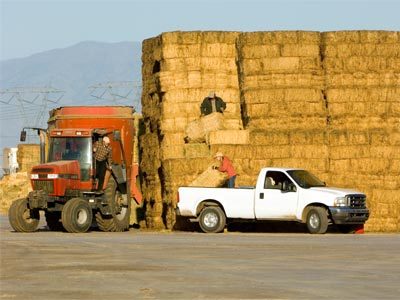

You want to transport equipment, people or both. The big question is simple. can your rig handle it?
Knowing payload limits isn’t guesswork. This is basic math. Two numbers are required. Two specific figures staring you in the face.
The first is the Gross Vehicle Weight Rating (GVWR). Second, its curb weight.
that’s it. Pull one from the other. The result is your safe payload capacity.
What GVWR actually means
GVWR is the hard ceiling. This is the maximum total mass that the manufacturer says the vehicle can handle. Fully loaded. Ready to roll.
This includes everything.
The metal, glass and plastic of the car itself. All fluids needed to maintain operation. gas, oil, cooling water, brake fluid. Not just a splash. A full operational load.
Then there’s you. passenger. Goods. tool. roof rack. Whatever you strap to the roof.
This number is printed on the sticker. It is usually located on the driver’s side door frame near the latch. It is also mentioned in the user manual. Online databases list the most common models. Don’t guess. Check it out.
Vehicle weight: the reality of empty tanks
The weight of the vehicle is the weight of the vehicle itself. Empty of people. Empty of cargo.
But not empty of life.
Vehicle weight figures assume that the fuel tank is full. Contains all operating fluids. This is the weight of the car when it is parked in the driveway and ready to start.
If you weigh your car on a scale with half a tank of gas, that number is useless for this calculation. Stick to the manufacturer’s rated curb weight.
Subtraction game
Payload capacity is what’s left over.
Take the GVWR. Remove the curb weight. What remains is your allowance for human flesh and steel.
This is a concrete example.
Imagine a mid-size sedan.
GVWR: 3,500 lb (1,588 kg).
Vehicle weight: 3,000 lb (1,361 kg).
3500 minus 3000 equals 500 pounds (227 kilograms).
You have 500 pounds to play with.
Enough for 4 adults and 1 bag of groceries. Or one adult and a motorcycle. Choose wisely.
Does body style change math?
Does the calculation change if I’m going with a pick-up truck compared to a sedan?
No, this formula is universal. GVWR minus vehicle weight equals payload.
However, the margins vary wildly.
Loading capacity of the truck
The pickups are designed for work use. GVWR is typically much greater than vehicle weight. This creates a larger buffer. Greater loading capacity.
However, don’t assume all trucks are created equal.
Half-ton trucks have a payload of 1,500 to 2,000 pounds. Large 3/4 ton or 1 ton trucks can weigh over 3,000 pounds and in some cases over 4,000 pounds.
The curb weight of the truck is also higher. It has a heavier frame, bigger engine and stronger suspension components.
This is where hobbyists often stumble. They see the massive towing capacity
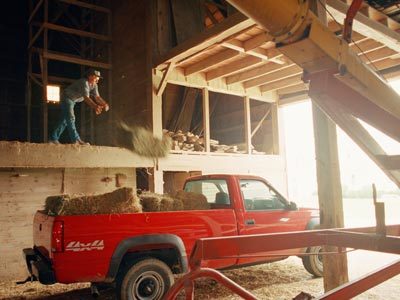
The definition of “payload” varies greatly depending on the underlying content. You don’t carry drywall around your Subaru Outback for modifications, and you don’t need a Class 8 semi to pick up a week’s worth of groceries at the store. Expectations change. Hardware changes.
In America, truck classification is more than just a marketing gimmick. These are strict limits set by the federal government based on Gross Vehicle Weight Rating (GVWR). This number determines the maximum total weight of the vehicle itself, as well as its interior, upholstery and equipment.
This can be looked at from two perspectives: specific weight classes and broader duty categories. Although they overlap, they serve different purposes.
8 federal weight classes
The DOT divides the road into eight different sections. If a truck’s GVWR exceeds its class limit, it is operating illegally. The government draws the line as follows:
- Class 1: 6,000 lbs (2,722 kg)
- Class 2: 10,000 lbs (4,536 kg)
- Class 3: 14,000 lbs (6,350 kg)
- Class 4: 16,000 lbs (7,258 kg)
- Class 5: 19,500 lbs (8,845 kg)
- Class 6: 26,000 lbs (11,793 kg)
- Class 7: 33,000 lbs (14,969 kg)
- Class 8: Over 33,000 pounds
That’s a steep climb. Convert from a light pick-up truck to a rigid-frame industrial beast in just eight steps.
Light, Medium, and Heavy Duty
For regulatory and insurance reasons, the DOT has simplified these eight categories into three main categories.
Light covers Classes 1 and 2. These are standard pickup trucks, vans and SUVs. If you’re buying a Ford F-150 or RAM 1500, depending on the engine and options, you’re likely to be in the Class 3 range, which many consider to be over the “lightweight” limits.
Medium-duty spans Classes 3 through 5. This is where things get serious. You’re looking for box trucks, cutaway chassis cabs, and large work trucks. Ford F-550 Super Duty and Chevrolet 3500 HD are often lands here.
Heavy duty includes everything in Class 6 and higher. These are rigs that carry cargo across state lines. Class 8 is a big boy. Any vehicle with a GVWR greater than 33,000 pounds falls within this range.
Knowing what class your vehicle falls into is more than just a compliance issue. This determines the load capacity. It shows how much weight you can add before the suspension breaks and voids your warranty.
Once you know which of these categories your truck belongs to, you can determine how much payload it can carry during your trip.
The math is simple, but brutal. Subtract the
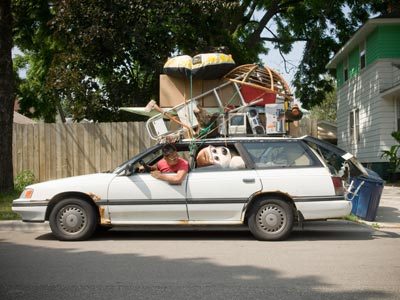
You might treat your car like a rolling suitcase. You throw your bags in, buckle up the kids and set off. The payload is off the radar. For the sedan, the numbers are grim. Anything heavy enough to damage the suspension may not fit in the trunk. This is a safe assumption.
However, this way of thinking becomes dangerous when switching machines.
Manufacturers do not guess these limits. They calculate it based on a normal average person. It weighs 150 pounds (68 kg) per seat. This is a blunt instrument. It doesn’t matter if you weigh 120 pounds or 200 pounds. The calculation remains the same.
“Think of each empty seat as a bucket that holds 150 pounds of potential cargo.”
If the rear seat is empty, there is a 450 lb (204 kg) “phantom load”. You can fill that space with equipment. Bags. Boxes. Heavy equipment. However, when this threshold is exceeded, the car becomes unstable. Suspension compression. The control performance decreases. You’re not just carrying the weight. You’re compromising safety.
This is the main difference between sedans and SUVs. People think that crossovers and SUVs have unlimited capacity. They don’t. They just have higher ceilings.
SUV payload
SUVs are changing the game. They carry more mass, but they also attract more mass. The difference is not only in the raw numbers. It’s about how weight affects the vehicle’s center of gravity.
SUVs can carry a lot more cargo than sedans, right? Yes. However, the penalties for exceeding this limit are even more severe. A sedan might bottom out or its handling is poor. An overloaded SUV can overturn. The physics changes because the vehicle is higher off the ground.
When you load your SUV, you’re not just counting weight. You study distribution. Roof rack? That’s high up. It raises the center of gravity. Suddenly that 150lb load in the roof box hurts more than the 150lb in the trunk.
The most important thing is to know the Gross Vehicle Weight Rating (GVWR) of your model. It’s not a suggestion. This is a hard limit printed on a sticker inside the driver’s door frame.
- Sedan: Lower load limit. Tighter fault tolerance.
- SUV: Greater loading capacity, but greater risk in the event of overloading.
- Trucks: Maximum payload, but different load dynamics (bed and cab).
Stop guessing. Look at the label. Do the math. Subtract the weight of each passenger. Reduce the animal’s weight. Subtract the weight of your favorite heavy-duty toolbox. You can store the rest safely in the trunk of your car or on the roof.
What else? You are driving a hazard. Unlike the sedan, you might not come back down to earth gracefully.
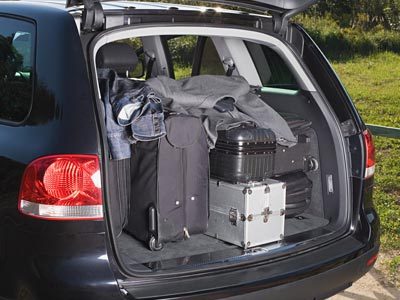
Pick-up trucks dominate the transport industry. You’re thinking about the bed. You think about your weight. But what about SUVs? They manage this strange middle ground. They are not cars at all. They are not trucks at all. These are in the gray area where carrying capacity meets passenger comfort.
Its appeal is easy to see. Fold the back seat down. Suddenly you have a huge amount of storage space. Equipment that cannot be installed on sedans can also be installed. ski rack. furniture. Heavy equipment. The interior volume is flexible. I adapt.
However, there are serious limitations.
Unlike pickup trucks, SUVs have roofs. Products cannot be stacked empty. You fill the boxes. It stops when it hits the ceiling. or when you reach your weight limit. It doesn’t matter which comes first.
Cycle risk
This is where physics gets boring.
SUVs have a high center of gravity. This is not surprising. As a result, it handles corners differently than the Honda Civic. That’s why it feels stable on gravel roads, but makes you nervous when turning in tight corners. Load the luggage into the vehicle. Place heavy objects in the back. Or on the roof. Raise your focus even higher.
Now you are in danger of falling.
It’s not just about whether the car crashes. It’s about control. When an SUV crashes, the consequences are dire. The roof has collapsed. Loss of structural integrity. Manufacturers know this. Regulators know it.
The National Highway Traffic Safety Administration (NHTSA) was involved. The rules have been in force since September 2004. All vehicles with a gross vehicle weight rating (GVWR) of less than 10,000 pounds must be tagged. It’s on the door frame. The maximum weight of passengers and luggage is listed.
You’ve seen it before. Feel free to ignore it.
“The sticker shows the combined weight of all passengers and luggage.”
This number is not a suggestion. It was a tough stop. Anything else and you’re playing with physics.
Stability and security
Car manufacturers are not turning a blind eye. They know that consumers fear rejection. They know that the perception of SUVs as “dangerous” is not entirely unfounded.
So they added technology. Electronic stability control (ESC) is standard. This is not magic. Gravity cannot be resisted. But you can intervene. If you take a corner too sharply with a heavy load, the system brakes each wheel. It pulls you back. It can save lives.
However, technology has its limits. Bad reading habits cannot be fixed. A center of gravity that is too high cannot be compensated.
The hard truth about traffic
SUVs can carry more stuff than sedans. That’s true. However, don’t confuse carrying capacity with carrying capacity.
The payload is the weight that the vehicle itself can support. This includes passengers. Also contains fuel. This also includes cargo. Minus own weight. Flat head screwdriver. A cargo limit remains.
Most midsize SUVs have a towing capacity of around 1,000 to 1,500 pounds. Some large trucks have more than 3,000 units. The difference is huge.
If you have to carry 2000 lbs.
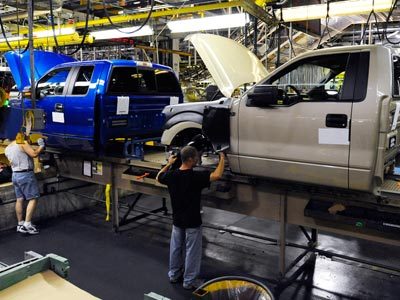
Knowing the truck’s capacity is the starting point. But what happens if your equipment, cargo and passengers exceed this limit? Are there legal or mechanical solutions? You get the pickup you want, but the factory maximum load doesn’t meet your specific needs.
Truck manufacturers almost always offer optional towing packages. These are more than just signs. These are feature upgrades designed to improve performance and provide the tools you need for heavy workloads. The basic package may include a trailer wiring harness and a heavy-duty towbar. Add a safety chain. Some manufacturers go further. They installed bigger engines. The brakes were updated. A more efficient cooling system has been added to prevent overheating under pressure.
Overloading the vehicle creates a dangerous situation that can cause injuries to you, your passengers and other drivers.
If you ignore these restrictions, you are playing with fire. If you have to because of overloading, the police can issue you a dangerous loading ticket. No one wants that kind of headache. But if you follow the rules, you’ll be on the right side of the law.
Search for a specific number
Depending on the make and year of your car, you can see the exact payload in the table below. Browse by manufacturer with which your car is compatible.
Acura payload
| Year | Model | Maximum Load (lbs) |
|---|---|---|
| 2006 | MDX | – |
| 2006 | RL | – |
| 2006 | RSX | – |
| 2006 | TL | – |
| 2006 | Toronto Stock Exchange | – |
| 2007 | MDX | 1158 |
| 2007 | RL | – |
| 2007 | RDX | Chapter 870 |
| 2007 | TL | – |
| 2007 | Toronto Stock Exchange | 850 |
| 2008 | MDX | 1158 |
| 2008 | RL | – |
| 2008 | RSX | Chapter 870 |
| 2008 | TL | – |
| 2008 | Toronto Stock Exchange | 850 |
| 2009 | MDX | 1158 |
| 2009 | RL | – |
| 2009 | RSX | Chapter 870 |
| 2009 | Toronto Stock Exchange | 850 |
Acura Details:
– Acura GVWR
– Acura GAWR
– Acura GCWR
– Acura cargo capacity
– Acura Curb Quality
– Acura towing capacity
Audi payload
| Year | Model | Maximum Load (lbs) |
|---|---|---|
| 2006 | A3 | – |
| 2006 | A4 | – |
| 2006 | A6 | – |
| 2006 | A8 | 1213 |
| 2006 | S4 | – |
| 2006 | TT | 728 |
| 2007 | A3 | – |
| 2007 | A4 | – |
| 2007 | A6 | – |
| 2007 | A8 | – |
| 2007 | Q7 | – |
| 2007 | RS4 | – |
| 2007 | S4 | – |
| 2007 | S6 | – |
| 2007 | S8 | 1213 |
| 2008 | A3 | – |
| 2008 | A4 | – |
| 2008 | A5 | – |
| 2008 | A6 | – |
| 2008 | A8 | – |
| 2008 | Q7 | – |
| 2008 | R8 | – |
| 2008 | RS4 | – |
| 2008 | S4 | – |
| 2008 | S5 | – |
| 2008 | S6 | – |
| 2008 | S8 | – |
| 2008 | TT | – |
| 2009 | A3 | – |
| 2009 | A4 | – |
| 2009 | A5 | – |
| 2009 | A8 | – |
| 2009 | Q7 | – |
| 2009 | R8 | – |
| 2009 | S4 | – |
| 2009 | S5 | – |
| 2009 | S8 | – |
| 2009 | TT | – |
Audi detailed specifications:
– Audi GVWR
– Audi GAWR
– Audi GCWR
– Audi’s cargo capacity
-The weight of an Audi car
– Audi’s towing capacity
BMW payload
| Year | Model | Maximum Load (lbs) |
|---|---|---|
| 2006 | 325 | 325 1058 |
| 2006 | 330 | 330 1058 |
| 2006 | 525 | 525 1102 |
| 2006 | 530 | 530 1102 |
| 2006 | 550 | 550 1102 |
| 2006 | 650 | 650 Chapter 838 |
| 2006 | 750 | 750 1058 |
| 2006 | 760 | 760 – |
| 2006 | M3 | – |
| 2006 | M5 | 1058 |
| 2006 | M6 | Chapter 941 |
| 2006 | X3 | 1025 |
| 2006 | ||
| 2006 | Z4 | Chapter 551 |
| 2006 | Z4M | Chapter 584 |
| 2007 | 328 | 328,926 |
| 2007 | 335 | 335 1058 |
| 2007 | 525 | 525 1102 |
| 2007 | 530 | 530 1102 |
| 2007 | 550 | 550 1102 |
| 2007 | 650 | 650 Chapter 838 |
| 2007 | 750 | 750 1058 |
| 2007 | 760 | 760 1058 |
| 2007 | Alpina B7 | – |
| 2007 | M5 | – |
| 2007 | M6 | – |
| 2007 | ||
| 2007 | X5 | 1113 |
| 2007 | Z4 | Chapter 551 |
| 2007 | Z4M | Chapter 584 |
| 2008 | 128 | 128 Chapter 882 |
| 2008 | 135 | 135 Chapter 882 |
| 2008 | 328 | 328,926 |
| 2 |
Chevrolet Payload Breakdown
Payload isn’t just about hauling gear. It’s the difference between a vehicle that performs as intended and one that is unreasonably stressed. If you look at the 2006 Chevrolet lineup, you’ll see that the numbers speak volumes for design priorities. The Silverado 3500 HD is #1 in the industry with a maximum payload of 5169 lbs. It’s heavy duty capability. Compare that to the Aveo or Cobalt, where the data shows a dash. These vehicles are not built for cargo use. The Tahoe weighs in at 1522 lbs, not bad for a full-size SUV, but the Suburban 2500’s weight jumps to 2828 lbs. A sturdy frame makes the difference.
By 2007, things had changed. The Silverado 1500 is now 1,658 lbs less than the previous 1,913 lbs. Why the drop? The weight of the vehicle varies depending on the equipment level and engine option. The Silverado 2500 HD is priced between £3,458 and £3,606 depending on the model. The Tahoe’s cargo capacity actually increased by 1,835 pounds in 2007.
In 2008, the Tahoe Hybrid was introduced. The load capacity is 1830 lbs. It lost five pounds compared to the gas version. Batteries are heavy. The Silverado 3500 HD goes up a bit to 3621 pounds in some trims, while the 2006 model is better in other trims.
In 2009, the Express Van received even more attention. The maximum weight of the Express 3500 is 4147 lbs. That is a commercial workhorse. The Silverado 3500 HD weighs 3873 lbs. The Colorado is slightly down 1250 pounds.
“Even within the same model designation, payload varies greatly depending on cab type, bed length and engine choice. Be sure to check your VIN number on the door frame sticker.”
Chrysler Annual Load Limits
Chrysler’s approach to payload in this era was conservative. The PT Cruiser stands out. In 2007, it could handle 1907 lbs. That’s surprising for a retro hatchback. Town & Country minivans weighed 1200 lbs in 2007 and 2008. Not much has changed over the years. The 300 and 300C sedans have the 2006 dash throughout. Why? The carrying capacity is not dimensioned except for passengers and luggage.
The Aspen SUV made the list in 2007 at 1600 lbs. It maintained that number in 2008 and 2009. In 2009, the added weight of the Aspen Hybrid was reduced to 1500 lbs. Once again, the battery pack affects the payload. The PT Cruiser lost its rating in 2009. This indicates that certain trims or configurations are no longer rated or there are gaps in the information for those model years.
Dodge Ram and Sprinter payload information
Dodge dominated the heavy-duty segment during these years. The Ram 3500 is a beast. In 2006, it hit 4660 lbs. By 2008, it climbed to 4870 lbs. Then, in 2009, it dropped to 3560 lbs. Why the drop? It could be a change in configuration availability or a change in how the rating for a particular wheelbase option is calculated. Variations were also seen in the Ram 1500. In 2006 it started at 1750 pounds, in 2007 it was the same, in 2008 it went up to 1810 pounds and in 2009 it went down to 1490 pounds.
The Sprinter vans were serious tools. The 2006 Sprinter Wagon 2500 had a payload of 4824 lbs. In 2007, that number dropped to 3,074 pounds. The 2008 and 2009 models stayed at 3074 lbs. The Sprinter Van 3500 started at 3950lbs in 2006, rose to 4530lbs in 2008 and remained the same in 2009.
The Durango stayed at 1750 lbs in 2006 and 2007 and went up to 1780 lbs in 2008 and 2009. The Dakota hovers between 1630 lbs and 1750 lbs.
Ford F and E Series Specifications
Ford’s payload numbers are where enthusiasts pay attention. The E-Series vans are the kings here. The 2006 E 350 Super Duty weighs 4165 lbs. In 2007, it reached 4200 lbs. As of 2009 it weighs 4060 lbs. The E 250 ranges from 3435 lbs to 3700 lbs and then levels off at around 3530 lbs.
The F-150 is the benchmark. In 2006 it was valued at £1640. In 2007 and 2008 it weighed 1650 lbs. Then in 2009 that weight jumped to 3030lbs. Wait. 3030 lbs? This appears to be a typo in the source data or a significant change in the way certain high-end configurations are valued. Most of the F-150s didn’t see such a significant increase at the time. However, the F-250 dropped from 3100 lbs to 3030 lbs in 2008, while the F-450 dropped from 6120 lbs in 2008 to 3900 lbs in 2009. These numbers for the F-450 are in agreement. In general, congestion levels are stable. The 3900 lbs number for the 2009 F-450 may be a data error or a specific trim limit.
The Ranger has held steady at 1260lbs for all the years available. The Escape Hybrid can handle 1040 lbs. The Explorer starts at 1414lbs and goes up to 1520lbs.
GMC Sierra and Yukon Payload Rating
GMC usually mirrors Chevrolet’s specs, but the numbers here are slightly different. The 2006 Sierra 3500 is rated at 4658 lbs. In 2009 it was £4812. That’s progress in three years. The Sierra 2500 ranges from 3892 lbs to 4058 lbs.
The 2008 and 2009 Yukon Hybrid is rated at 1830 lbs. Perfect for Chevrolet Tahoe Hybrid. Non-hybrid Yukons were £1,522 in 2006, £1,835 in 2007 and then £1,830 in 2008 and 2009.
By 2009, the Canyon had gone from 1,547 lbs to 1,422 lbs. The Envoy remained at £1146 until 2009 and this figure has not changed since then, but records show it remained at £1146** during this period.
“When comparing GM trucks, remember that HD models have a much higher payload than light trucks. The difference between a 1500 and a 2500 can exceed 1000 pounds.”
The data covers the period 2006–2009. This marks a time when manufacturers were just beginning to integrate hybrid technology into mainstream trucks and SUVs. The payload loss of hybrids is real. Weight loss of 50-100 kilograms is common. This is a trade-off for efficiency.
Why are these numbers important today? Because used buyers often overlook payload. They look at a lightly driven Silverado and think it can handle everything. Originally calculated at 1650 lbs, adding a camper, toolbox and passengers pushes the limit. Overloading can affect the integrity of brakes, suspension and tires.
Chrysler and Dodge numbers aren’t as important as just transportation, but they show how minivans and vans are used. The PT Cruiser’s 1907 lb rating is an outlier in the Chrysler lineup. We recommend a sturdy frame that fits your size.
The Ford E-series is still a popular option for conversions. Knowing the exact load capacity helps prevent overloading when adding ladders, tools and customers. The 2007 E-350’s 4200 lb rating is an important number for a converter.
The GMC Sierra 3500 has been improved over time to reflect engineering excellence. The increase from 4,658 lbs to 4,812 lbs was not easy. This means better material strength in other areas or reduced vehicle weight.
Some 2009 Ford Rating Differences (Like F-450 Downgrade)
Honda loading capacity (2006-2009)
The mid-to-late 2000s Honda lineup offered a wide variety of Honda Payload features that depended largely on whether you were hauling people or gear. The Ridgeline is clearly a workhorse. In 2006 and 2007 it was stable at 1549 lbs. It declined slightly in later years, but remained a practical choice for heavy loads.
Odyssey is also a strong candidate. From 2006 to 2009 it had a capacity of 1349 lbs. Whether you’re towing a small trailer or hauling lots of passengers and their luggage, the Odyssey handles it with ease.
Pilot offers similar utilities. As of 2007, the capacity is 1322 lbs. Payload data for the 2006 Pilot is missing from existing records, but note that by 2007 it had become a serious competitor to the Ridgeline.
Small cars tell a different story. 2007 and 2008 Civics (non-hybrid) have a hard limit of 385 lbs. The Element is even tougher, offering 675 lbs for 2007 and 2008. The Insight is a mild hybrid limited to 400 lbs for 2006. Most other sedans and SUVs in the Honda family do not have specific maximum payload numbers for these years. This usually means that they are not designed for heavy commercial use.
Hummer Strength and Scale
Hummer doesn’t do it subtly. The specifications of the HUMMER payload reflect its focus on brute force. The H3 was the entry level model and was sold between 2006 and 2008 for 1150 lbs. In 2009, chassis improvements brought it up to 1312 lbs.
The H3T is the pickup version of the H3 and is slightly lighter than the 2009 model at 1090 lbs.
Big H2 is strong. As of 2008, it can carry 2200 lbs. In 2009, this figure remained at 2200 lbs. Specific payload data for the H2 was lacking in its early years (2006-2007), but due to its size, it was designed for heavy-duty tasks. The 2006 H1 Alpha weighs in at 3087 lbs, showing that the military-inspired design translates to strong carrying capacity.
Hyundai and Infiniti specifications
Hyundai is moving up to the higher-end Infiniti payload, and the data shows some interesting compromises. The QX56 SUV is the heavyweight champion here. In 2006 the load capacity was 1,440 lbs, increased to 1,553 lbs in 2008 and remained the same in 2009.
The FX series is lighter. Early on the FX35 and FX45 were hovering around 1183 lbs and 1091 lbs respectively. By 2009 the FX35 had risen to 1213 lbs and the new FX50 was 1185 lbs. The M-series sedans are even lighter, with the M35 and M45 weighing around 996-1010 lbs at their peak in 2008.
Hyundai itself does not list specific cargo capacities for most of the 2006-2009 lineup (Accent, Azera, Elantra, etc.). This suggests that passenger comfort was more important than heavy cargo capacity during this period, with the notable exceptions of Veracruz and Santa Fe, but these models also do not have specific numbers in this data set.
Isuzu and Jaguar Utility
Isuzu is often overlooked, but Isuzu payload numbers are impressive. The 2006 i-280 holds 1532 lbs. The i-370 started at 1190 lbs in 2006, jumped to 1516 lbs in 2007, but dropped to 1260 lbs in 2008. From 2006 to 2008, the Ascender held steady at **1133 lbs.
Jaguar is all about luxury, which means less cargo. The 2009 XK Coupe weighs 815 lbs. The XKR Coupe is lightweight at 772 lbs. From 2006 to 2008, the X-Type SUV always weighed 1058 lbs. Most sedans (S-Type, XJ8, XJR) do not have a stated capacity, which means they are not suitable for carrying large amounts of cargo.
Jeep durability and modifications
Jeep loading methods vary by model. The Commander is an expert in heavy lifting. In 2006 it held up to 1620 lbs. It dropped to 1310 lbs in 2007 and leveled off at 1300 lbs in 2008 and 2009.
The Grand Cherokee is tough. It started at 1100 lbs in 2006, dropped to 1050 lbs in 2007 and rose to 1180 lbs in 2008 and 2009.
The Wrangler is an exception. Weight started at 800 lbs in 2006 and increased to 1000 lbs from 2007 to 2008. For 2009, the Wrangler Unlimited jumps to 1150 lbs, indicating that the extended wheelbase models can handle more weight.
Between 2007 and 2009 the Compass and Patriot remained stable at 925 lbs. Liberty was stable at 1150 lbs from 2006-2009.
Kia and Land Rover Loads
Kia’s Kia Payload specifications show an SUV focus. The 2009 Borrego has excellent performance with a 1815 lbs payload capacity. Sedona minivans weighed 1532 lbs in 2007 and 2008.
Small cars like the Rio are light. The carrying capacity of the Rio (Hatchback) is 1273 lbs and the Rio 5 (Wagon) 1200 lbs. Sportage SUVs ranged from 1195-1289 lbs and reached 1289 lbs in 2007.
Land Rover’s Land Rover Payload numbers emphasize the weight of the luxury SUV. The LR3 started out strong in 2006 at 1806 lbs, but dropped to 1695 lbs in 2007 and then leveled off at 1325 lbs in 2008 and 2009.
The Range Rover itself is even lighter, staying at 1360 lbs in 2006 and 2007, but dropping to 1136 lbs in 2008 and 2009. The Range Rover Sport remained at 1,301 pounds until 2009, when it dropped to 1,067 pounds. LR2 has stayed at 1100 lbs for the past two years.
Lexus Precision Engineering
Lexus usually provides exact figures for vehicle weight. Lexus cargo capacity is generally higher in SUVs. The LX 570 topped the list in 2008 and 2009 at 1411 lbs. The GX 470 was stable at 1329 lbs from 2006-2009.
The RX350 has changed significantly. It started at 1385lbs in 2006, dropped to 925lbs in 2008, and remained the same in 2009. This suggests that it was redesigned or re-evaluated in the mid-2000s.
Sedans like the ES 350 have curb weights of 1,099 lbs for 2007 and 2008. The IS-F is a very capable track car with a 2008 curb weight of 878 lbs. The luxury flagship model, the LS 460, weighs 1201 lbs in 2008 and 2009. The SC 430 still weighs 690 lbs. lb**, reflecting its design as a grand tourer rather than a driver.
Lincoln Luxury and trailers
Lincoln’s Lincoln Payload data shows that the focus is on large SUVs. Mark LT pickups are very durable, offering 1620lbs in 2006 and **1680lbs after
We live in the end of the 21st century. The market is changing. Crossovers are growing and growing. Truck operating costs are getting more and more expensive. For owners who actually use their car for work and equipment, cargo capacity becomes more important.
When loading a truck or SUV today, knowing the maximum payload can be a challenge. It’s like the difference between carrying tools and getting a flat tire.
Let’s take a closer look at the brands that built this era.
Mazda payload
Mazda is playing a double game. There are also smaller ones like the MX-5 and RX-8. And then there are trucks and crossovers that actually have to carry weight.
The B-series truck was renamed the Ford Ranger. If you look at the B2300, you’ll see that it has the same limitations as its Ford cousin.
2006 Mazda Payload
| Model | Maximum Load (lbs) |
|---|---|
| B2300 | 1260 |
| B3000 | 1680 |
| B4000 | 1260 |
| Mazda3 | – |
| Mazda 5 | 1239 |
| Mazda 6 | 1319 |
| Mazdaspeed 6 | 963 |
| Multipurpose passenger car | 1506 |
| MX-5 | 637 |
| RX-8 | 779 |
| Tribute | 988 |
2007 Mazda Payload
| Model | Maximum Load (lbs) |
|---|---|
| B2300 | 1260 |
| B3000 | 1680 |
| B4000 | 1260 |
| CX-7 | – |
| CX-9 | 1493 |
| Mazda3 | – |
| Mazda 5 | 1239 |
| Mazda 6 | 1080 |
| Mazdaspeed3 | – |
| Mazdaspeed 6 | 963 |
| MX-5 | 637 |
| RX-8 | 765 |
2008 Mazda Payload
| Model | Maximum Load (lbs) |
|---|---|
| B2300 | 1260 |
| B4000 | 1260 |
| CX-7 | – |
| CX-9 | – |
| Mazda3 | – |
| Mazda 5 | 1191 |
| Mazda 6 | 1087 |
| Mazdaspeed3 | – |
| MX-5 | 633 |
| RX-8 | 765 |
| Tribute | 1057 |
| Tribute to Hybrid | 1083 |
2009 Mazda Payload Information
| Model | Maximum Load (lbs) |
|---|---|
| B2300 | 1200 |
| B4000 | 1260 |
| CX-7 | – |
| CX-9 | – |
| Mazda3 | – |
| Mazda 5 | 1191 |
| Mazda 6 | 1082 |
| Mazdaspeed3 | – |
| RX-8 | 754 |
| Tribute | – |
Payload capacity continues to decrease in Mazdaspeed models. Additional equipment includes a weight penalty. The RX-8 lost some capacity compared to the previous year, likely due to exhaust devices and a slight increase in weight.
Mercedes-Benz payload
Mercedes does not disclose the cargo capacity of most sedans. C-Class, E-Class and S-Class often have lines. Why? Because I have no intention of filling Class C with gravel. We pick up passengers.
Trucks and SUVs tell different stories.
2006 Mercedes-Benz Payload
| Model | Maximum Load (lbs) |
|---|---|
| Class C | – |
| CL level | – |
| CLK level | – |
| CLS Class | – |
| E class | – |
| ML350 | 1616 |
| ML500 | 1496 |
| Rated | 2000 |
| S class | – |
| SL Level | – |
| SLK level | – |
| SLR McLaren | – |
2007 Mercedes-Benz Payload
| Model | Maximum Load (lbs) |
|---|---|
| Class C | – |
| CL level | – |
| CLK level | – |
| CLS Class | – |
| Class E | 1157 |
| G500 | 1289 |
| GL320 | 1086 |
| GL450 | 1620 |
| ML350 | 1635 |
| ML320 | 1422 |
| ML500 | 1620 |
| ML63 AMG | ML63 AMG |
| Rated | 1635 |
| S class | – |
| SL Level | – |
| SLK level | – |
| SLR McLaren | 626 |
2008 Mercedes-Benz Payload
| Model | Maximum Load (lbs) |
|---|---|
| Class C | – |
| CL level | – |
| CLK level | – |
| CLS Class | – |
| Class E | 1157 |
| G500 | 1764 |
| G55 | 1433 |
| GL320 | – |
| GL450 | 1620 |
| GL550 | 1620 |
| ML320 | 1422 |
| ML350 | 1635 |
| ML550 | 1620 |
| ML63 AMG | ML63 AMG |
| R marking | – |
| S class | – |
| SL Level | – |
| SLK level | – |
| SLR McLaren | 342 |
2009 Mercedes-Benz Payload
| Model | Maximum Load (lbs) |
|---|---|
| Class C | – |
| CL level | – |
| CLK level | – |
| CLS550 | – |
| Class E | 1157 |
| GL450 | 1620 |
| GL550 | 1620 |
| ML350 | 1635 |
| ML320 | 1422 |
| ML550 | 1620 |
| ML63 AMG | ML63 AMG |
| R-rated | 1365 |
| S class | – |
| SL Level | – |
| SLK level | – |
The SLR McLaren’s payload is surprisingly low. Carbon fiber and titanium help keep weight down, but suspension and brakes at this power level put a strain on payload space.
The G-class has a good performance. From 2007 to 2008, the G500’s weight jumped from 1,289 pounds to 1,764 pounds. This is a big leap forward. Did you change the frame? Or is the data for 2007 missing? These figures indicate significant design changes or revisions to later models.
Mercury payload
Mercury is dying. Sable is gone. Montego is on the decline. But the Mountaineer went on and shared bones with the Ford Explorer.
2006 Mercury Payload Information
| Model | Maximum Load (lbs) |
|---|---|
| Grand Marquis | – |
| Sailor | 1075 |
| Mariner Hybrid | 920 |
| Milan | – |
| Montego | – |
| Monterey | 1320 |
| Climber | 1549 |
2007 Mercury Payload Information
| Model | Maximum Load (lbs) |
|---|---|
| Grand Marquis | – |
| Sailor | 1075 |
Saturn Payload Limits
The Saturn brand didn’t last forever. But for the folks who kept their Ion, Relay, or VUE running through the late 2000s, the numbers still matter. You need to know exactly how much weight you can shove into the cabin or bed before you compromise safety.
Start with the 2006 models. The Relay minivan handled 1350 lbs. If you were driving a VUE, you were looking at 1331 lbs. The Ion? No data. It was a small car. Small cars don’t carry much.
By 2007, Saturn tried to get serious with the Aura and Outlook. The Outlook, a crossover based on the Cadillac SRX architecture, offered a massive 1678 lbs of payload. That’s serious for the class. The VUE Hybrid bumped up to 1511 lbs, likely due to the battery pack adding structure but eating into the weight allowance elsewhere. The Aura sat at 1009 lbs.
2008 brought changes. The VUE payload dropped to 1000 lbs for the gas model and 1111 lbs for the hybrid. The Astra, a small import-based hatchback, managed only 893 lbs. The Outlook held steady at 1678 lbs.
In 2009, the Outlook crept up slightly to 1709 lbs. The VUE Hybrid stayed at 1111 lbs. The gas VUE remained at 1000 lbs. The Aura didn’t change, sticking at 1009 lbs.
If you owned a Sky roadster, well. No payload data. Probably because the car was tiny and light, and adding weight would ruin the handling.
“Payload isn’t just what you put in the trunk. It’s people, fuel, and cargo combined.”
Scion Payload Limits
Scion was Toyota’s youth division. Fun, cheap, and barely heavy enough to worry about payload.
Look at the 2006-2009 data for the tC, xA, xB, and xD. It’s all dashes.
Why no numbers? Scion didn’t publish payload ratings for these compact cars in their standard specs during this period. They were designed for people, not cargo. The tC coupe was sporty. The xB was boxy. The xA and xD were city runners. They didn’t need a rated payload because they weren’t built to haul heavy loads. If you tried to stuff one full of gear, you’d be guessing. And guessing with suspension and tires is a bad idea.
smart Payload Limits
The smart fortwo is an anomaly. It’s two seats. Maybe a dog in the back if you’re cruel.
In 2008, the fortwo had a max payload of 463 lbs. That’s it. Two adults? You’re cutting it close. Add fuel, add groceries, and you’re pushing the structural limits. It’s a city runabout. Enjoy the parking spots. Don’t try to move furniture with it.
Subaru Payload Limits
Subaru has always been about utility wrapped in all-wheel-drive package. But payload varies wildly depending on whether you’re driving a sedan or an SUV.
2006
The B9 Tribeca led the pack at 1560 lbs. The Baja, that weird pickup/wagon hybrid, managed 1070 lbs. The Forester was solid at 1060 lbs. The Outback sat at 1245 lbs. The Legacy Wagon did 1300 lbs. The Impreza WRX STi? Only 794 lbs. That car is fast, not heavy-duty.
2007
The Tribeca held at 1560 lbs. The Forester dipped slightly to 1010 lbs. The Outback dropped to 995 lbs. The Legacy Wagon stayed strong at 1290 lbs. The Baja was gone.
2008
The Tribeca plummeted to 660 lbs. That’s a massive drop. Maybe the model was dying or the specs changed. The Forester stayed at 1010 lbs. The Outback recovered slightly to 1085 lbs. The Impreza WRX STi improved to 1080 lbs.
2009
The Forester jumped back up to 1230 lbs. The Outback settled at 1078 lbs. The Tribeca stayed low at 660 lbs. The Legacy remained at 1055 lbs.
“Check your door jamb sticker. The payload capacity is specific to your vehicle’s options.”
Suzuki Payload Limits
Suzuki is gone from the US market now. But these cars are still on the road.
2006
The XL7 SUV was the workhorse at 1168 lbs. The Grand Vitara managed 1175 lbs. The Forenza sedan did 981 lbs. The Aerio and Reno were around 950 lbs. The Verona? No data.
2007
The XL7 bumped up to 1626 lbs. The rest of the lineup? Dashes. They likely didn’t publish payload for those smaller cars.
2008
The XL7 held at 1626 lbs. The Grand Vitara sat at 1178 lbs. The Forenza and Reno were 926 lbs. The SX4 managed 893 lbs.
2009
The Equator (a rebadged Ford Escape) had no data. The SX4 stayed at 893 lbs. The XL7 and Grand Vitara? No data. The end of the line.
Toyota Payload Limits
Toyota is reliable. Their payload numbers are usually consistent. But hybrids tell a different story.
2006
The Tundra pickup led with 1835 lbs. The Highlander was strong at 1840 lbs. The Highlander Hybrid dropped to 1605 lbs because of the battery. The Tacoma did 1540 lbs. The Sienna minivan managed 1570 lbs. The Land Cruiser was 1500 lbs.
2007
The Tundra dropped to 1470 lbs. That’s a significant hit. The Highlander stayed high at 1844 lbs. The Highlander Hybrid held at 1605 lbs. The Prius? Only 863 lbs. It’s a light car. The FJ Cruiser managed 1280 lbs.
2008
The Tundra stayed at 1470 lbs. The Highlander dipped to 1821 lbs. The Highlander Hybrid took a bigger hit to 1427 lbs. The Land Cruiser improved to 1585 lbs. The Sienna held at 1420 lbs. The 4Runner stayed at 1285 lbs.
2009
The Tundra didn’t improve. Still 1470 lbs (wait, the table says 1470 for 2008, but 2009 table is incomplete in source… actually 2009 Tundra is not listed with a number in the prompt? No, looking closely at the provided text: 2009 Tundra is missing from the list, only 4Runner, Avalon, Camry, Corolla, FJ, Highlander, Highlander Hybrid, Land Cruiser, Matrix, Prius, RAV4, Sienna, Tacoma, Yaris, Venza are listed. The Tacoma did 1540 lbs. The Highlander stayed at 1821 lbs. The Highlander Hybrid at 1427 lbs. The Sienna jumped to 1513 lbs. The Corolla improved to 1113 lbs.
“Payload includes everything except the vehicle’s own weight. Fuel, passengers, cargo. All of it.”
Volkswagen Payload Limits
VW made fun cars. Some carried more than others.
2006
The Touareg SUV was the king at 1400 lbs. The Passat Sedan did 1140 lbs. The Jetta managed 1094 lbs. The GTI was 1024 lbs. The Beetle Convertible/Coupe were light at 772 lbs.
2007
The Touareg dipped to 1325 lbs. The Passat Wagon did 1272 lbs. The Jetta stayed at 1094 lbs. The Eos convertible was light at 893 lbs.
2008
The Touareg 2 returned to 1400 lbs. The Passat Wagon dropped to 1063 lbs. The Passat Sedan dropped to **


