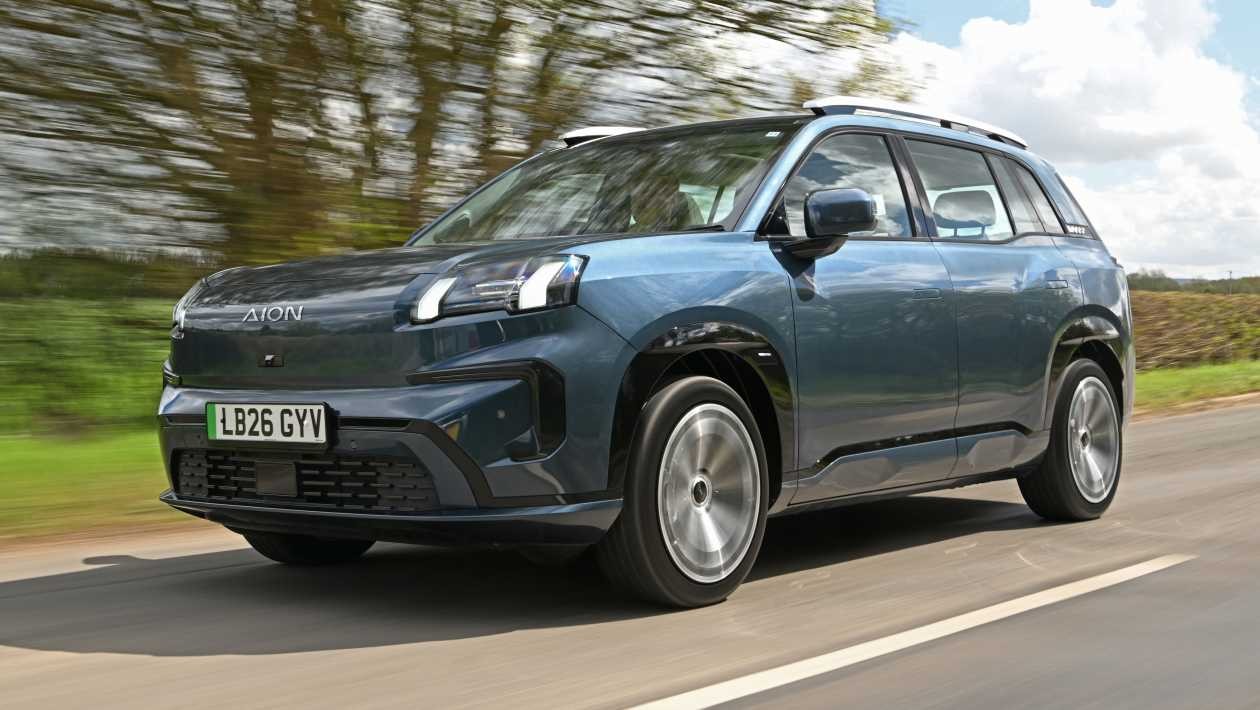
It is a lot to ask of one car.
Aion is brand new in the UK. The V is the spearhead. If this electric SUV flops the Chinese brand leaves town in disgrace. If it lands the whole market shifts. The pressure is palpable.
The short answer? It tries very hard.
Standard kit is generous. The numbers are decent. The warranty is insane. But the screens? The nagging cameras? You will hate them.
What is this, exactly?
Aion is not some garage startup. It belongs to GAC. That is the Guangzhou Automobile Company, fifth biggest carmaker in China. In the UK, they are partnering with Jameel Motors, the Saudi firm behind the Farizon van.
Think of it as Toyota-grade manufacturing with Chinese ambition. The V sits on the same platform as the Toyota bZ3X sold in China. Even the upcoming Aion UT hatch uses the same bones.
Priced around £35k, the 4.6-meter V is aiming for mid-size SUV glory. The competition is stiff. Skoda Elroq. Kia EV3. BYD Atto 3. Geely EX5. Leapmotor B10. The field is crowded.
Yet the lineup is bizarrely simple.
There is only one trim. Maybe one Premium Pack above it. Just one powertrain. A 75.3 kWh battery giving you 317 WLTP miles. That is it.
“We’re quite used to family EVs bringing sports-car power, but the V has not been designed to show off.” — Alastair Crooks
Driving it
Early reports from Australia were harsh. Bottoming out. Harsh rides. Lifeless steering. Aion heard that. They tuned the chassis before launching here. The result?
Composed.
Not exciting. Never fun. But competent. The 204 bhp motor puts torque to the front wheels. 240 Nm. Not much by EV standards. But it feels nippy in traffic. The throttle in Sport mode is sharp. In Eco? Mushy. You have to plan your moves.
The steering has some weight now. No more numbness. But feedback is still absent. Tilt the wheel too fast and the front end gets upset. Lean into bends. The body roll is manageable thanks to that relatively light curb weight for the size.
The road noise? Low. The cabin feels planted on the 19-inch standard wheels. Unless you hit a pothole. Then you get a thud. A significant thud. Surprisingly brutal for such a tall suspension setup.
At 70 mph a vibration creeps in. Like an out-of-balance wheel. Probably the tires. Run them softer next time. Aion plans bigger wheels later. Smaller tires with more sidewall would help more.
Range and Charging
One battery size. 75.3 kWh.
WLTP says 317 miles. We saw different.
We drove mixed roads. Started at 95% charge. The computer showed 303 miles remaining. We averaged 3.6 miles per k Wh. Realistically expect around 270 miles before hunting for a charger.
Charging speeds? Strong.
180 kW peak means a 10-80% boost in 24 minutes. That is fast. Faster than the Skoda. Faster than the Kia. Home charging on the supplied 11 kW brick takes 8.5 hours. Most people have 7.4 kW home units. Plan for roughly 12 hours overnight.
Insurance group 32 or 33. Roughly line with the Renault Scenic. Much higher than the Ford E-Explorer. Depreciation? Better than expected. Keep about half its value in three years. Cheaper than the Renault. Better than the Kia? Actually yes, the Kia drops value faster here.
Interior and Tech
Open the door. Mechanical handles. Aion was specific about that. Electric handles get bad press in China for jamming in winter. They learned. Good.
Inside the materials feel good. Soft touch everywhere. No rattles. The metal trim is mirror-finished and damped nicely when you touch the handles. Even the manual air vents are a little flimsy but the overall vibe is premium.
Heated and cooled front seats. Wireless charger. Panoramic glass roof with an electric blind. You have plenty here.
Then the screens ruin it.
A massive 14.6 inch touchscreen dominates the dash. It is beautiful to look at. Terrible to use.
Almost every control is digital. Volume. Defroster. Mirror settings. The menu is on the right side. For the driver that is the passenger side of the screen. You have to stretch across your lap to change settings while driving. It is distracting. Dangerous, really.
The steering wheel has touch buttons too. They don’t always register your swipe.
“Aims for upmarket ambience and nails it. Things unravel slightly with fiddly infotainment.” — Alastair Crooks
The sound system has nine speakers. Adequate. Not amazing. Better than Sony’s system in the Geely EX5 though.
The Premium Pack
Do you need it? Probably not.
£1,495 buys you a small fridge. 6.6 liters. Real leather instead of faux. Massaging front seats. A table that pops up from the rear seat backrest. Only on the passenger side. One table. For the back row.
The hinges are stiff. Damped. They benchmarked it against the Bentley Mulsanne rear table. Cool. Useless for a family car though. Who carries a fridge in a £35k SUV for work commutes? The fridge is cool. The table is a gimmick. The seats? Maybe worth it for long hauls. But the rest is fluff.
Practicality
Space. Lots of it.
Tall in the back. Flat floor. Rear seats tilt back so big legs can stretch.
Front passengers have no glovebox. Curry hooks instead? Weird. You can store stuff in a box under the central armrest instead.
Boot space? 427 liters.
Small. Really? It is longer than the Kia and Skoda but has less space. The Geely EX5 is worse off. You can lower the floor a bit but it stays limited. Remove the parcel shelf if you can. The screws are exposed and visible. It looks unfinished. Takes away from that premium feeling.
Safety
Five stars Euro NCAP. 2025 rating. Top marks.
All the kit is standard. Radar. Cameras. Brakes. But the execution is annoying.
The driver camera screams if you look at the phone. Or even just look left to check blind spot. The system is overzealous. Beeping every time you cross a new speed limit sign? Loud. Constant. And you cannot turn many of these systems off fully. Turn off the engine. Start again. They all turn back on.
The text on the screen is tiny too. Hard to read in sunlight. Your eyes leave the road. The beeper yells. Repeat.
Final Thoughts
It is an odd beast.
The build quality surprises. The range charging feels solid. The driving manners are polite. It fits right between the big Chinese rivals and the established Europeans.
The technology though? It fights you. Touch controls that do not register. Menus buried three clicks deep. The exterior is bland. Boxy. The chequered flag on the rear pillar makes zero sense on a non-racing family car.
Yet the aftersales support looks robust. The Great 8 warranty includes free servicing for three years. That lowers the risk significantly for early adopters.
Aion is serious about this market. They are putting resources where it matters. Mechanics. Battery life. Residual value. They should have paid more attention to the screen. Just put a knob back for the volume.
It will drive well enough. You might find yourself yelling at the screen more than the road. Is the warranty enough to overlook the digital headaches? Maybe. Probably not for some.
See you down the line.