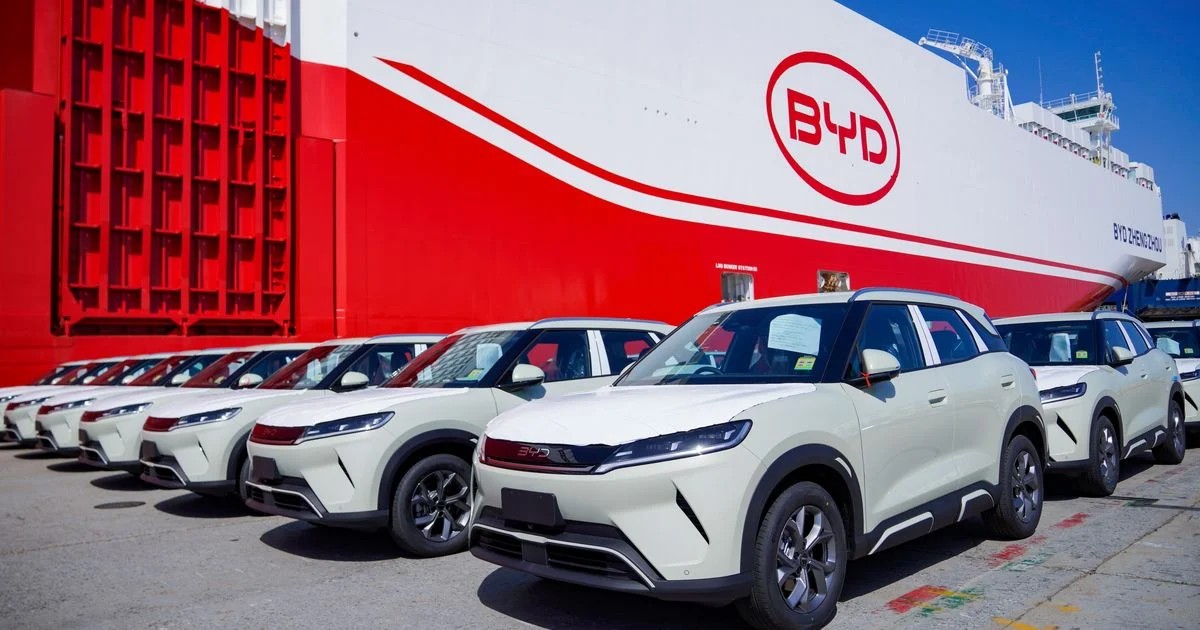
The numbers are staggering. In June alone, BYD moved 18,881 units.
That is just 243 cars behind Toyota for the monthly crown. It’s more than double what came in third-placed Ford.
This isn’t a fluke. For the third month running, the Chinese EV giant sits at number two in the Australian sales charts. Since launching in 2022 — just four years ago — they have sold nearly 140,000 cars. They are on track to be a top-three brand by year’s end.
But speed comes with friction.
When you expand a product range from a single model to twelve in a matter of months, things get messy. We’ve seen the hiccups. The unsold cars piled up at a NSW fun park last year. Buyers had to be compensated up to $3,500 when build-date delays caused headaches.
So, how is BYD Australia keeping its dealer network from buckling under the pressure?
Training and space: The real bottleneck
Sajid Hasan, BYD Australia’s chief product officer, didn’t sugarcoat the challenges when speaking about the launch of the Seal 6 Touring.
“It is a challenge, particularly the training,” he admitted.
The broader the product line, the harder it becomes to train staff effectively. You’re asking salespeople to become experts on compact hatchbacks, sedans, wagons, SUVs, and now a dual-cab ute. That’s a steep learning curve for floor staff who are still mastering the basics.
Yet, Hasan insists the network is ready. And hungry.
“They’re crying out for it,” he said. “I haven’t heard anyone say ‘stop giving them new products’.”
Showroom space is another logistical headache. BYD now operates over 100 locations across all eight states and territories. With dozens more openings planned, physical space for displays becomes scarce.
Does every new model need a key in the ignition on the showroom floor? Probably not.
Dealer experience matters here. They know which models draw eyes in their specific postcode. They decide what stays, what goes, and what rotates seasonally. It’s a practical approach to managing inventory without requiring a warehouse for every trim level.
What’s coming next
The model range isn’t slowing down.
If you think twelve cars is a lot, wait until late 2026. BYD has confirmed two new nameplates arriving then:
* The M9 people mover
* The V9 commercial van
This expansion targets different segments. The M9 caters to families needing max space. The V9 appeals to tradespeople and businesses.
It raises the question: Can a dealer network built for a few popular SUVs comfortably pivot to supporting heavy commercial vehicles and massive people movers?
Why it matters for buyers
For consumers, this rapid growth means choice — but also potential growing pains.
You might find your local dealer short on staff knowledge or struggling with delivery timelines. The brand is moving fast, perhaps faster than its retail infrastructure can fully stabilize.
However, the demand is undeniable. With sales volume this high, economies of scale kick in. Parts availability should improve. Service bays will fill up, yes, but the brand’s presence ensures competition drives service standards up eventually.
The gap to Toyota is tiny. 243 cars.
That margin for error is non-existent. If BYD’s training and supply chain falter, that lead could vanish overnight. For now, they’re pushing hard, trusting dealers to manage the complexity one showroom at a time.
Whether that trust is misplaced remains to be seen. The fun park storage lot was just the beginning.