Some cars are ugly.
Plainly, undeniably ugly.
Standard metrics say they fail. Critics roll their eyes.
And yet.
Here sits a handful of metallic offenders. Flaws and all, they get under your skin. You look away, but you look back. Here’s the list of things we can’t quite stop caring about.
BMW iX
People laughed.
Honestly, they mocked the thing. The “rabbit teeth” kidney grille. That trapezoid front fascia that looked like a mistake. It didn’t scream “Ultimate Driving Machine” like every BMW before it. It screamed “tablet with wheels.”
Be that as it may, inside the box? It’s plush.
We’re talking an electrochromic sunroof. A Bowers & Wilkins 4S system that vibrates your seats into submission. Tech density that’s actually usable.
In the standard xDrive40 trim, 322 bhp doesn’t exactly shatter records. You’re not launching from the lights with terror. But the electric torque response is instant. It glides. It surges. And you know what? We’re convinced a smaller grille would’ve looked weak next to those aggressive eyes. Let the haters talk.
Renault Avantime
Ugly is subjective. Or maybe the Renault Avantime proved otherwise in 2001.
Critics called it grotesque. A failed MPV-coupe experiment.
It was neither here nor there. But it’s the only one of its kind. Ever.
Since its death, we haven’t seen another MPV dare to dress up like a coupe. The silver roof pillars, those side windows that vanish into thin air. It looked fast, even standing still. We suspect it begged for a Renaultsport badge, maybe that zippy 3.0 V6 tucked behind wing-mounted intakes.
Renault took a massive risk. They didn’t copy the competition. They built a concept car that you could legally register.
That’s why we forgive its looks.
Volvo 240
Bland.
Dull.
Boxy.
The naysayers said all that. The Volvo 240 lacked the sleek curves of its contemporaries. It was a brick. A charming, retro brick with square headlamps, functional wipers (why remove that feature?), and side strips that ran the entire length like a measurement tool.
Inside, it was sparse. But do you remember those rocker switches? The satisfying click-click-click of adjusting your vents? Add headrests from the 1970s, and suddenly the cabin has personality.
And the Turbo? The “Flying Brick” made 153 bhp.
By today’s standards, it’s sedate. In its era, it was peppily aggressive. The shape wasn’t aerodynamic, it was architectural. And we prefer it that way.
Daihatsu Copen
They compared it to a Crocs sandal.
Others said it was just a shrunken Audi TT. From the rear? Sure, there’s a Porsche 914 vibe too.
Cut styling. Adorable? Yes. But dismissing it based on proportions is a mistake.
Why? The drive.
The Copen weighed in at a mere 850 kg. That’s nothing. The little 0.6-liter turbocharged engine produced 68 bhp. It shouldn’t have worked. It should have wheezed.
Instead, it zinged.
You could throw that thing into a corner at alarming speeds. The weightlessness gives you road feedback that modern 2-ton cars simply cannot replicate. The smart electric roof folded away, wind in your hair, engine whining.
It was joy on a micro-budget. Who cares about the sandal look?
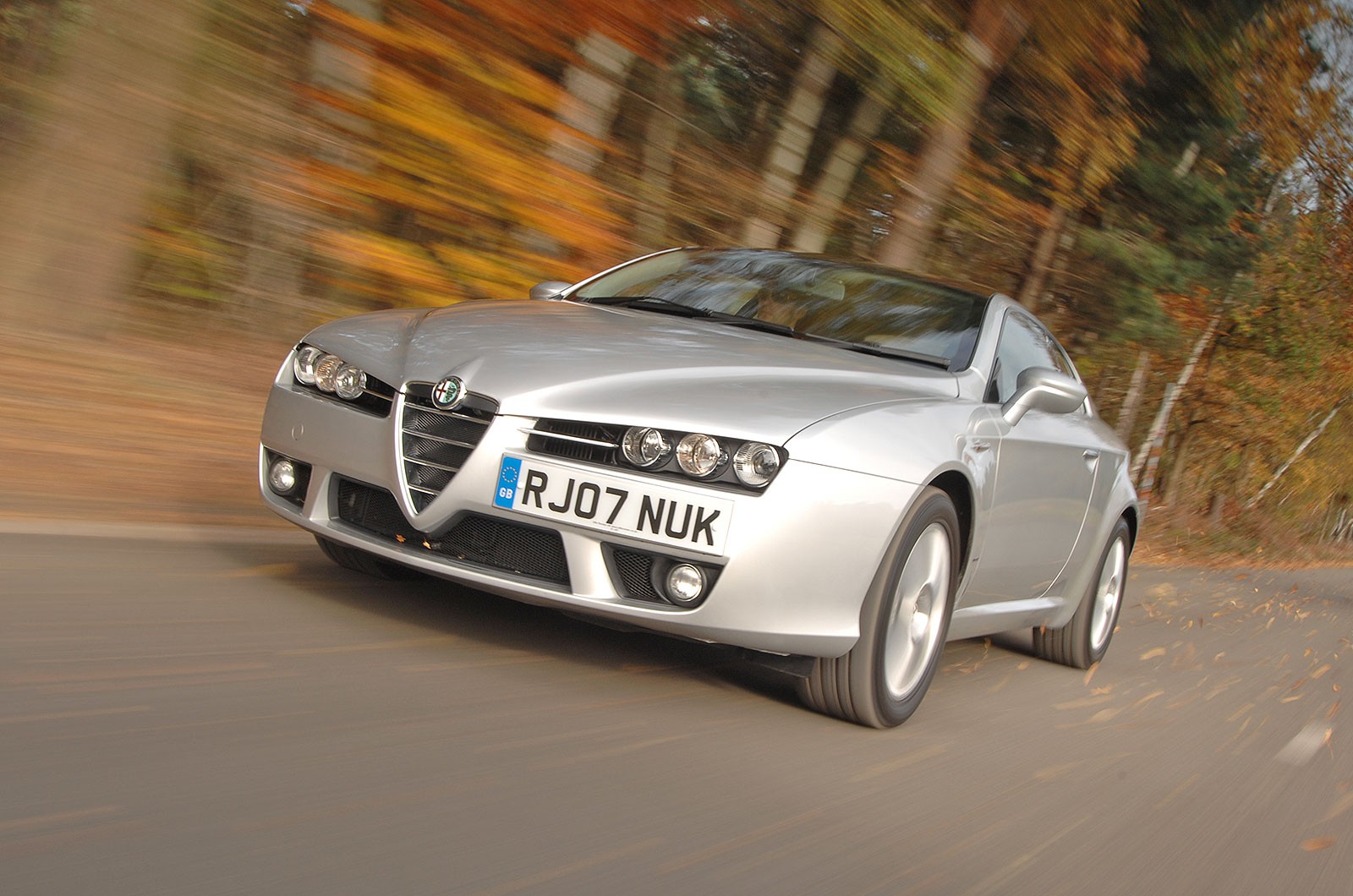
Alfa Romeo Brera
It was a bridge burned too soon.