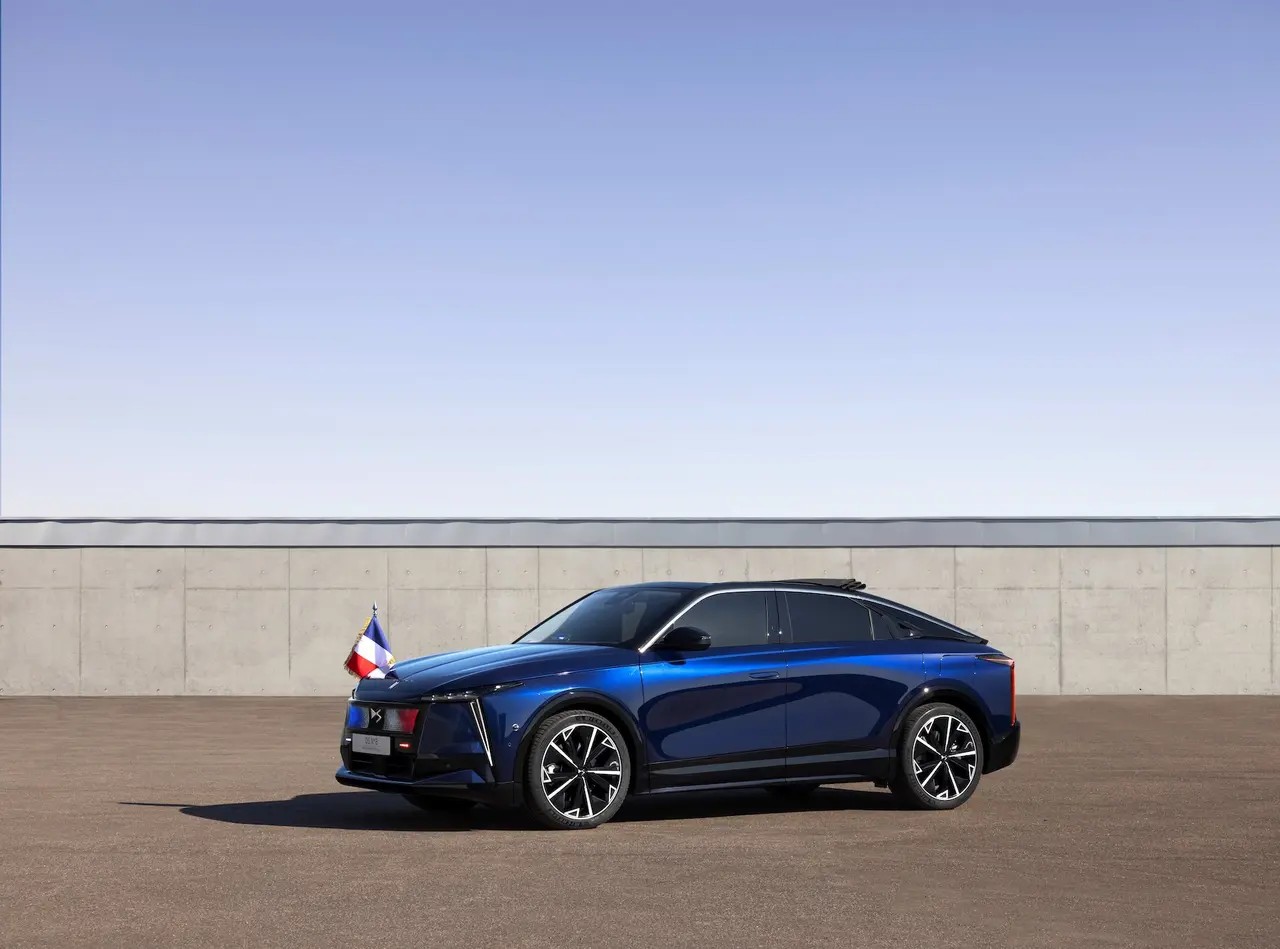
Emmanuel Macron just broke new ground. By selecting the DS N°8 Presidentielle, the French president became the first head of state in the world to switch to a fully electric official vehicle. This isn’t just a change in powertrain; it’s a statement. The car was unveiled during the May 8, 2025, ceremonies, marking a symbolic shift in presidential mobility.
Under the Metal: French Tech Meets Luxury
This machine is built on Stellantis’ STLA Medium platform. It’s a serious piece of engineering wrapped in French elegance. The battery is a massive 97.2 kWh unit. That capacity allows for a range of up to 750 kilometers under the WLTP cycle. For a vehicle that needs to be ready at a moment’s notice, that range is non-negotiable.
The presidential version stands out visually. It wears an exclusive Sapphire Blue paint job. The front features a tricolor illuminated grille. Specific badges in the colors of the Republic adorn the body. It’s not just an electric car. It’s a rolling symbol of French innovation and luxury.
Step inside, and the usual car interior logic goes out the window. This isn’t just a cabin; it is a showcase of French luxury, leaning hard into artisanal heritage. You are looking at materials that define haute couture, translated for the rolling chassis of a high-end automobile.
Take the marquetry. It is not standard wood grain. It is straw marquetry executed by the Lison de Caunes workshop. This is a niche craft, involving treated straw woven into intricate patterns that catch the light differently than any veneer on the market. It requires patience, precision, and a tolerance for fragility that modern manufacturing usually avoids.
Then there are the textiles. Métaphores supplied satin-finish fabrics that drape and reflect light with a softness you rarely see in automotive upholstery. Satin is unforgiving in other contexts, but here it adds a layer of visual warmth against the harder surfaces.
And the pleating? That comes from Lognon. Known for their work with fashion houses like Dior and Chanel, they brought their pleating expertise to the car’s interior. The resulting patterns are not just decorative; they add texture and depth, breaking up large surfaces and giving the eye something to track.
This is what happens when you stop treating a car as a machine and start treating it as a wearable luxury object. The materials speak a language of exclusivity that mass-produced leather and Alcantara simply cannot replicate.
It begs the question: why do we accept standardization as the norm? When you have the resources to hire masters of straw, silk, and pleated fabric, settling for generic options feels almost like an insult to the craft.
The result is a space that feels less like a cockpit and more like a private salon. It is loud in its quietness, demanding attention not through volume but through detail. Every touchpoint tells a story of specific French workshops, each specializing in a craft that has survived centuries of industrial change.
In a world increasingly driven by digital interfaces and electric drivetrains, this interior is a deliberate nod to the physical, the tactile, and the human hand. It reminds you that before the silicon and the software, there was the craft. And sometimes, that is exactly what you want to feel when you climb into the driver’s seat.
France’s official presidential car just got an upgrade, and it’s a big deal. The DS N°8 Présidentielle isn’t just another luxury sedan. It’s a statement. One that blends old-school French heritage with serious green tech.
This move signals a shift. The Élysée Palace is going sustainable. But it’s not sacrificing style for emissions data. It’s about showcasing French craftsmanship alongside cutting-edge environmental commitment.
A Legacy of Presidential DS Models
This relationship isn’t new. It goes back to Charles de Gaulle and his trusty DS 19. That car set the tone. For decades, the DS brand has been the go-to for French heads of state.
Emmanuel Macron broke the mold slightly when he arrived in 2017. He drove a DS 7 Crossback. A crossover. Modern, practical, but still distinctly French.
Now, the DS N°8 Présidentielle takes the wheel. It continues the lineage. But it does so with a clearer mandate: sustainability. How does a country balance tradition with a net-zero future? The answer is this car.
It’s not just about replacing a vehicle. It’s about redefining what an official state car looks like in 2024. The DS brand is leveraging its history to push forward.
The latest addition to the Elysée’s garage isn’t just another car. It’s a statement. By deploying this specific model, DS Automobiles is doubling down on its identity as the face of French luxury and innovation. They’re not just selling metal; they’re selling a narrative. A narrative that aligns perfectly with the state’s push for ecological transition.
The previous official rides had their own quirks. We’re talking about hybrid powertrains. Specifically, two armored DS 7s and the Renault Rafala that rolled past the stands during the July 14th parade. Each change marked a shift in branding, or at least, that’s what the manufacturers would want you to believe.
But look closer at the numbers.
Since 2017, the current president has cycled through no fewer than six different vehicles. Three distinct versions of the DS 7 alone. That’s not a fleet. That’s a revolving door.
“Stability” is a word Macron used on TV this week. The garage disagrees.
Is this level of turnover necessary? Or is it just expensive theater? The concept of stability he espouses feels hollow when the cars keep changing every eighteen months. Six rides in seven years. For a position that’s supposed to represent continuity, the logistics seem frantic.
The DS 7 was armored. The Rafala was a political flex. This new one? It’s just another chapter in a story that refuses to settle.
People ask why the official car changes so often. The answer isn’t in the mechanics. It’s in the optics. Each new vehicle is a fresh canvas for the presidency to paint its current priorities. Ecological? Fine. Luxury? Absolutely. Stability? Not really.
The tires on the last one might not even be worn out yet. But the message has already moved on.