


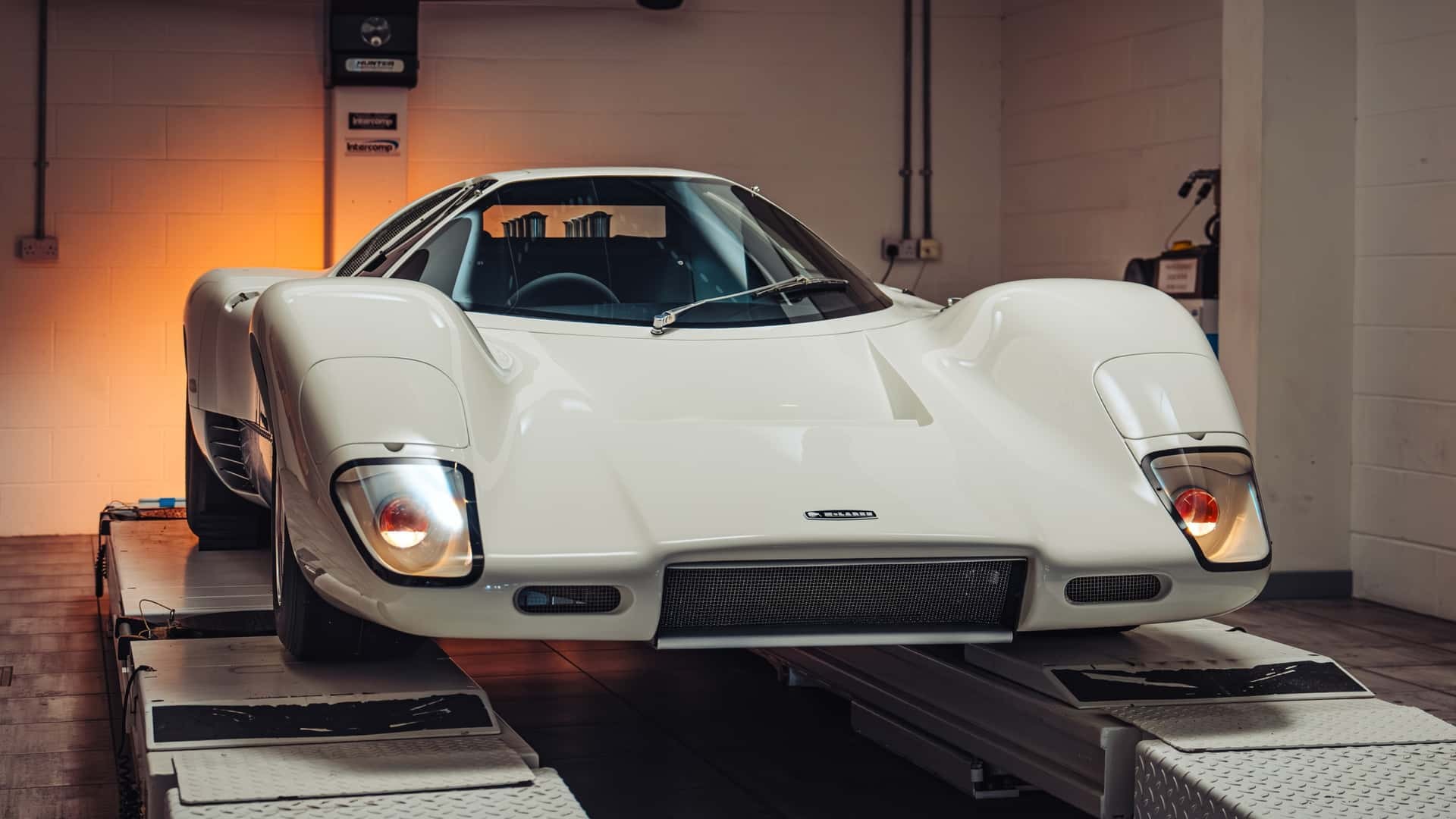
It wasn’t the F1. That’s the thing nobody expects.
Everyone thinks McLaren the road-car company started with the hypercar legend in the nineties. But way before that, before the wind tunnel data and the carbon fiber obsession, there was just a race car with street lights taped on. Bruce McLaren had this idea. In the late sixties. He took the M6A—a purebred racer—and tried to tame three of them. One actually became his daily driver. He called it the M6GT.
It never went to production.
A tribute to the very beginnings, and a spiritual education for the future.
Jon Simms puts it gently. The reality is harder work. More than fifty years later, McLaren Special Operations (MSO picked up the gauntlet. They didn’t guess. They dug up original molds, dusty drawings, and old photos. The result is a one-off. Just one. You’ll see it at this year’s Goodwood Festival of Speed if you’re lucky enough to be there.
The Bones Are British
Under the hood sits a familiar name for anyone who remembers the trans-Atlantic engine swap trend: a 5.7-liter Chevrolet V8. It makes roughly 370 horsepower. Not fast by modern standards. Fast for 1967. The power routes through a five-speed manual. No paddles here. You shift with your hand.
The heads on this block are unique. They feature a double “camel hump.” A distinctive visual signature that the new build kept exactly as Bruce designed it.
The chassis comes straight from an original M6A frame. Authenticity wasn’t optional; it was mandatory. The body panels? Formed in the exact same molds Bruce used back in the day. Even the fasteners threw them a curveball. The UK ditched imperial measurements decades ago, yet this car demanded them. Dome rivets, bolts, clips—it all had to be machined in inches because the original hardware spoke English units.
Making the windshield was a nightmare. There were no templates left. The team had to scan fragments of the original glass and send those scans to specialists who literally had to conjure new curves out of thin air.
Colnbrook White And Green Ghosts
The color is Colnbrook White. Creamy. Warm. Named after the small factory where Bruce dreamed this whole project into existence. That shop was right under the flight path to what was then London Airport (Heathrow today). Why there? Noise insulation is a myth; speed was the point. Bruce wanted zero time wasted between race sessions and his desk.
Inside, things get nostalgic.
The interior is green. It echoes the M2B, McLaren’s first Formula 1 car from 1966, which wore white with a green stripe. This cabin doesn’t clutter up. No screens. No buttons you can’t see in the dark. Just vinyl seats, basic analog gauges, and a gear knob carved from walnut. Simple.
Isn’t it strange how the simplest tools feel the most precise?
MSO usually builds things that scream faster than sound. They build limited-edition beasts that cost as much as a house and gather dust in garages. This? This feels different. It’s slower. Quieter. And maybe that’s why it matters. It’s not another spec sheet triumph. It’s an homage to a guy who built a factory under airport planes and wanted his race car to commute to work.
We’ll leave you with the car, white as milk, green inside, sitting perfectly still while history moves on.


