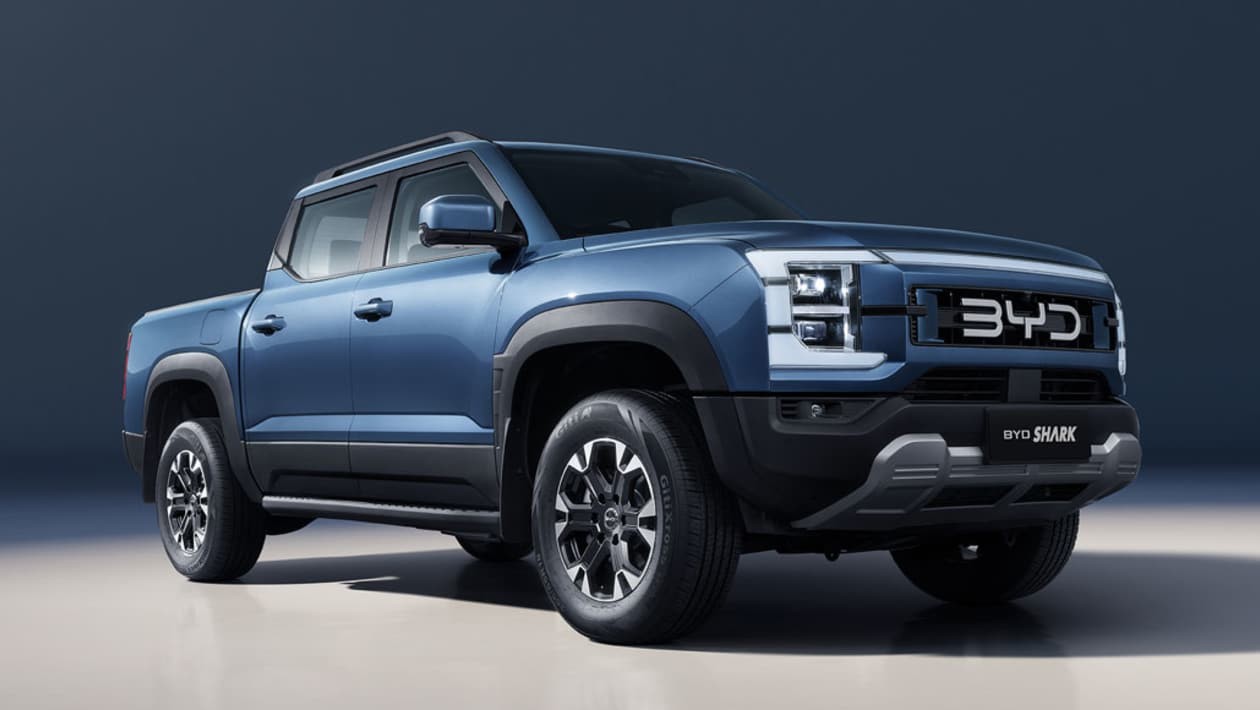
BYD is bringing the Shark. It costs £47,290. And it’s aimed squarely at the heart of the Ford Ranger’s domain.
The Toyota Hilux looks worried. So does the Mitsubishi L200, back from the dead. This new dual-cab beast lands with hi-tech specs, a massive screen, and a hybrid system that feels less like a truck and more like a rolling server room. There’s just one catch.
You can’t reclaim the VAT.
Business owners will hate that. It tips the value balance away from the traditional diesel workhorses they’ve trusted for years. Yet, for private drivers or company cars, the math might suddenly look different.
Inside the Cabin
Forget rusted bolts. This cabin screams luxury.
At launch, there’s only one variant, but it comes loaded. You get heated and cooled seats wrapped in faux-leather, a 12-speaker sound system, and a display so big it’s practically a billboard—15.6 inches, right there on the dash. Next to it, a 10.2-inch driver screen keeps tabs on everything else. Parking is handled by front and rear sensors, plus a 360-degree camera that makes tight spaces obsolete.
It’s not just a workhorse. It’s a lounge.
BYD isn’t just selling comfort, though. They’re selling the DMO platform—Dual Mode Off-Road. It sounds rugged. It feels tech-heavy.
Power, But At What Cost?
Here is the engine truth: The Shark combines a 1.5-liter turbocharged petrol engine with two electric motors. Power? 435bhp.
That is more than double what a Ford Ranger PHEV offers. The 0-62 sprint happens in 5.7 seconds. You hit 55 miles of pure electric range, thanks to a 29.5kWh battery. If you’re in a hurry, DC fast charging fills it from 30 to 82 percent in just 21 minutes.
Does it tow as much as a Ranger?
No.
This is the compromise. The Ranger hauls 3,500kg. It carries 1,000kG in the bed. The Shark? It tows 2,500KG and carries 790KG.
Heavy loads go to the diesel kings. But light loads? Maybe the electric future is fine.
The Tax Trap
Pickup trucks used to be a tax loophole. Not anymore.
They’re classified as passenger cars now. The flat commercial tax is gone. Instead, it’s all about CO2. Diesel Rangers hit a brutal 37 percent company car tax rate. The PHEV Ranger sits at 20 percent. The Shark?
With 46g/kM of CO2, it might slip into a much lower bracket.
Not as low as a full EV like the Hilux BEV—which sits at a tiny 4 percent. But lower than the hybrids. For someone who drives a company vehicle, this electric advantage matters more than the missing VAT refund. It’s a trade-off. Pay the VAT once. Save on the tax every year.
Why Steal from Ford?
Steve Beattie, BYD’s UK deputy, isn’t hiding the ambition. He wants Ranger buyers to switch.
The market has changed. Diesel is penalized. PHEVs and EVs are the new safe bets for corporate fleets.
“Rangers are being classed as cars now,” Beattie said.
Drivers want to try something new, he argues. Tesla Model 3 and Y buyers switched because they wanted difference. Now, he hopes truck drivers feel the same urge. Why not drop the diesel for the quiet hum of a plug-in?
We give them an alternative.
It’s a gamble. The network is there. The stock is ready. Whether the Shark has teeth enough to bite Ford’s dominance remains to be seen.