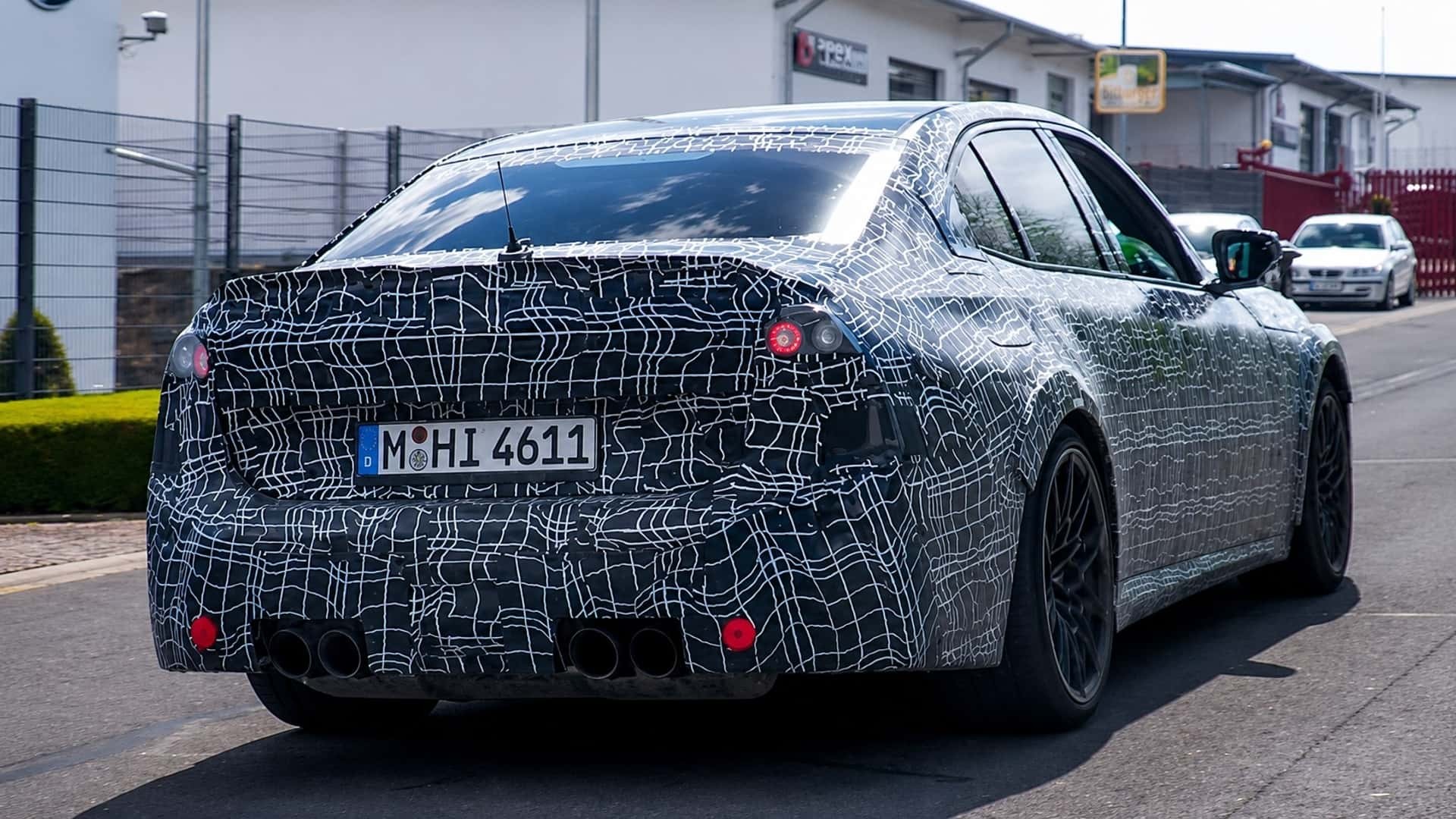
The camouflage is heavy. But the stance is unmistakable.
If you have been tracking BMW’s high-performance roadmap, you might be bracing for an electric-only future. The conversation dominates every auto forum, every magazine spread, every Twitter thread. The iM3 is coming. The Neue Klasse is inevitable.
But ignore that for a second. Look at the track.
The next internal combustion engine M3 is currently pounding asphalt at the Nürburgrings. It wears the codename G84. And according to the latest spy shots from Jeroen at Carspotter, the soul of this machine remains intact.
It’s a twin-turbo inline-six. Not a plug-in hybrid. Not a radical new layout.
Just more of what the faithful have paid a premium for.
Will the new M3 keep the inline-6 or switch to a PHEV?
The answer to “which powertrain for the next BMW M3” is becoming clear, if not final.
BMW has effectively ruled out the plug-in hybrid (PHEV) architecture for the compact flagship. This separates it from the larger M5, which embraces the PHEV setup for its blend of torque and efficiency. The M3 team, however, wants a different character.
Frank van Meel, head of M GmbH, has stated the inline-six configuration stays. Do not expect a V6. While BMW secretly prototyped one in the past, Munich has never put a production V6 into a sedan, and they aren’t starting now. The 3.0-liter straight-six is too good, too efficient, and too iconic to abandon just yet.
But “keep the inline-6” doesn’t mean “no change.”
BMW describes the next-gen six as a “new type.” That likely means refinements to the twin-turbos, pre-chamber combustion tech, and potentially a 48-volt mild-hybrid system to help meet Euro 7 regulations without killing the soul of the engine.
This answers the question of whether the M3 will get mild-hybrid assistance. It probably will. It’s a compliance move. But it won’t drive like a boat.
When is the 2028 M3 launching and how long is the wait?
If you want this car today, you are out of luck.
The current G80 generation is running hot, expected to stay in production until at least 2027. The replacement isn’t arriving in a hurry. Early whispers pointed to 2025. Then 2026. Now, realistic estimates place the debut at 2028.
That is a long wait for an M fan. But it aligns with the rollout of the new 3-Series platform.
- M350 (Standard): Expected closer to launch, possibly late 2024 or early 2025 for the non-M variant. This serves as the spiritual successor to the M340i and will share much of the new engine’s tech.
- True M3 (G84): The fully loaded, track-focused variant likely arrives a year or two after the base model refreshes.
This delay allows BMW to refine the engine. They want this inline-6 to last as long as possible.
Does the 2028 G84 M3 share looks with the i3 or the concept?
The design language is bleeding from the electric to the gas models faster than many expected.
BMW has admitted that future gas and electric models will look nearly identical. This creates an identity crisis for purists but solves a logistical headache for the factory.
The spy car shows:
- Flared Fenders: The wheels are wider, the body is stretched. It is unmistakably a performance sedan. It looks nothing like the standard 3-Series sedan currently on sale.
- The Glass Roof: This specific prototype features a fixed panoramic glass roof. No sliding panels. BMW will offer a lighter alternative, too—a composite material made from flax and basalt. This replaces carbon fiber on certain non-structural parts to cut weight.
- The Concept DNA: The M Concept Neue Klasse previewed the styling for years. While the G84 won’t be as wild, you can see the influence. The aggressive bumper intakes. The hint of the “ducktail” spoiler (hidden under tape).
One design cue is locked in for good: The double-yellow LED headlights and stacked cube-lights in the rear bumper. These will define M-branded cars from now until the industry pivots further.
The prototype also lacks the opening window section in the roof. Some M fans hate that. They want fresh air, not a sunbathing platform. BMW hasn’t confirmed if the production model allows a pop-up sunroof, or if it’s fully fixed.
Why is all-wheel-drive the likely only option for the G84?
The video does not show a transmission selector. But the consensus among industry insiders is stark.
Rear-wheel drive might be gone for the G84.
BMW is moving aggressively toward standard all-wheel-drive (AWD) setups. The weight distribution of an electric powertrain pulls the center of gravity differently. To compete, the gas model needs grip. An AWD system ensures launch control performance matches the electric variant.
If BMW kills rear-wheel drive, the purist argument falls harder. An inline-six is nice. AWD makes it accessible.
Is this a sacrifice for performance? Yes. Is it necessary to sell enough cars? Also yes.
Could a gas M3 Touring finally reach the United States?
Here is the wildest hope.
BMW is building a gasoline 3-Series Touring alongside the i3 Touring. They are not committed to exporting the M version to the US. The EPA hurdles are high. The demand, while vocal, might not justify the tooling changes.
But they are testing it. The wagon version exists on the chassis. If the G83 sedan works, the wagon works.
Do not hold your breath. But keep your eyes on the German regulatory filings. Sometimes the “forbidden fruit” slips through when regulations loosen just enough for a loophole.
The current G81 M3 wagon is already a myth in North America. The G84 Touring would be its vindication.
Is this the last gas 3-Series?
Probably.
The European Union aims for 90% CO2 reductions by 2035. The current 3-Series will linger until then. But the G84 cycle?
It lands in the 2030-2040 window.
That is the danger zone.
If this G84 platform survives until the early 2040s, the inline-six could become a relic overnight. BMW knows this. They are betting on a long lifespan for the architecture to squeeze every last ounce of combustion joy from the timeline before the ban becomes total.
The V8 made it through the first Euro 7 wave. The inline-six is meeting the new standard right now.
That implies one thing.
There is a future here. Maybe a short one. But it is a real one.
We get the M350 first. That’s our teaser. That’s the test mule in disguise. If it sounds like BMW says it should, the M3 is safe. If it sounds flat, muted, compromised, we know we are watching a ghost car before it even launches.
For now, the prototype runs. The camouflage hides the details. But the shape of the beast is clear.
Six cylinders. Turbocharged. Ready.